
Introduce yourself: tell us who you are in a few sentences and give us a little background on your career path thus far.
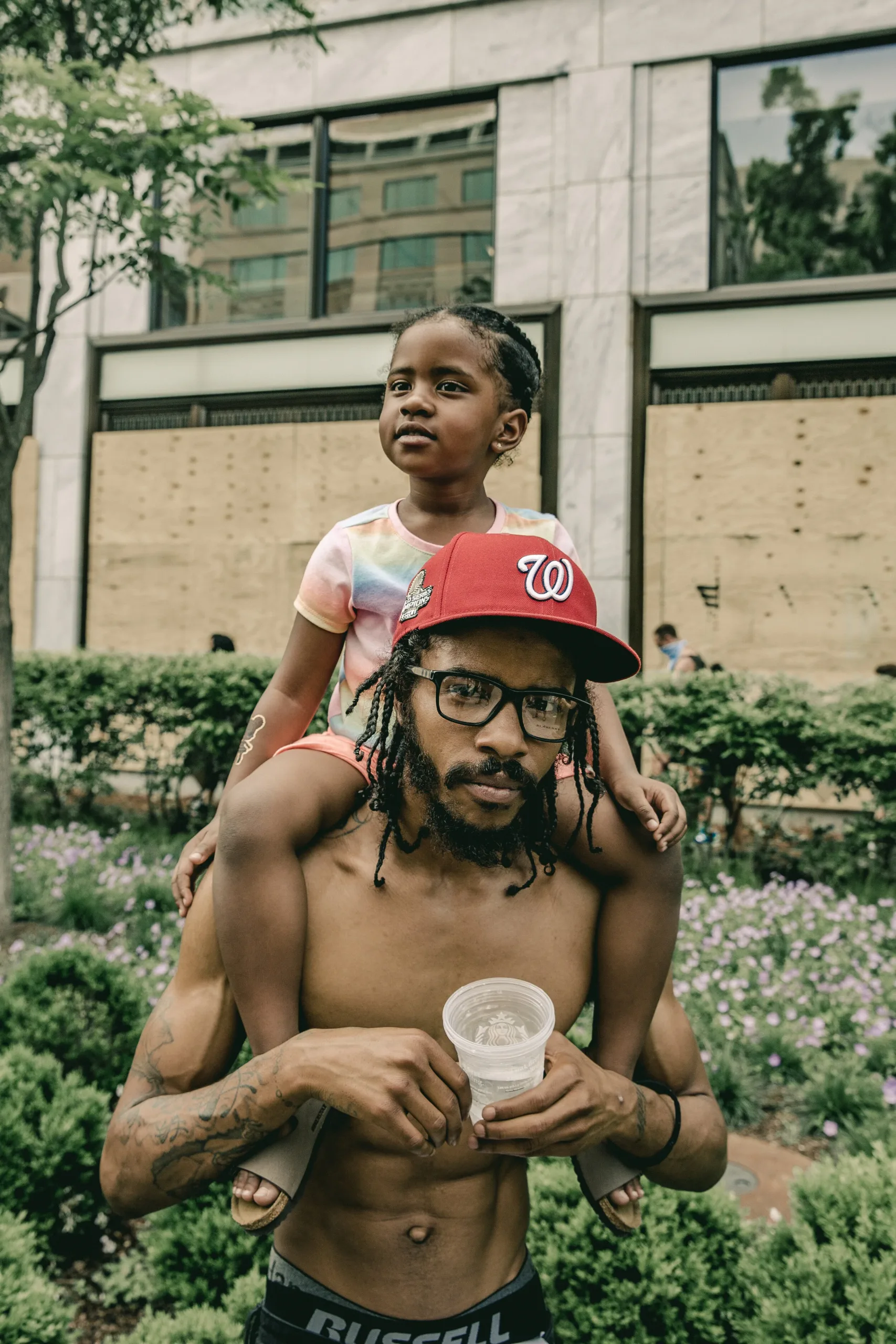
Executing at the intersection of passion and purpose. That is what self-taught artist Tayo Kuku aims to do every time he captures a shot. Tayo was born in Lagos, Nigeria and is currently living in the DMV (D.C., Maryland, and Virginia). He’s the eldest of four boys and graduated with a Civil Engineering degree but is sticking to his guns as a shooter. The 26-year-old Nigerian photographer picked up a camera for the first time in 2016 and never looked back. He prides himself on displaying and highlighting Black people and culture through his lens. In his four years shooting, his photos have been featured by various publications including Essence, Forbes, BET, and Teen Vogue.
What is your earliest memory with photography?
I got my first camera when I was 11 years old. It was a Polaroid camera my Grandfather got for me. I was always intrigued by it and later on when I got my first iPhone and Instagram was starting to boom, I would do a lot of #iPhononography as it was called back then: cityscapes, landscapes–just a bunch of cool things I saw. It has just carried on since then.
Describe your approach to visual storytelling?
I try to bring my culture and my life experiences into everything I do and show it in my work, one way or another. I’m influenced by everything in my life. Places I’ve been. Things I’ve seen. People I’ve met. Relationships I’ve had. Experiences I’ve gone through–those things have shaped who I am and my work. My background is what drives me to do meaningful work.
My creative process always starts with an idea first. Sometimes I know a model that would fit in that idea but it always starts with the concept that I’m trying to bring out. That leads into what I want people to feel when they see my work.
What is one piece of advice you would give to those just starting out or looking to improve their visual storytelling skills?
Biggest advice is just to do it. Sounds corny and ambiguous but that’s how I started. I’m self-taught, I’ve learned through just seeking information on my own. Whether it’s through YouTube or Google, but mainly practicing. Get out there and practice, shooting different people, different settings, and aiming to come out with different results in each shoot. Photography is not something you’re going to pick up and just master right away. Sometimes you may have a knack for it, I believe I just see things differently and that’s helped me develop quickly but nothing is possible without dedication and determination.
How did this particular project/body of work come about?
I live in the District of Columbia – the nation’s capital. In the aftermath of George Floyd’s murder, there was so much unrest and tension brewing which led to major demonstrations and marches in and around the city. As a photographer, I knew I couldn’t just sit back and watch from the sidelines. Rather, I knew it was my duty to document what I knew was a historical moment unraveling before me. Thus, I made it a point to go out and shoot the protests and marches.
How does this historical moment impact how you view both yourself as a visual storyteller and the work you’re creating?
I started off as a photojournalist of sorts. In college, I would walk around and just photograph the various people that made up the city of Philadelphia, exploring the different nooks and corners of the huge city. Being able to return to my roots made me realize the importance of photojournalism in historical moments like the one we’re in, especially as a Black photographer. It’s incredibly important that Black stories and narratives are captured and shared by the same people who are impacted by the stories being told.
What has been a specific surprise or challenge of working on these images?
The biggest surprise is the reception. I didn’t expect so many people to resonate with and be impacted by the photos I took. I was fortunate enough to document a different side of the protests and marches which once again supported the fact that the documentation of these events are crucial to our history and the accurate narration of them.
Pick 2-3 photos from your series to deconstruct: what was happening when you took the shot? Set the scene, what was going through your head?

The first march I documented was one which started at The White House and continued all the way to the United States Capitol building. It was my first time documenting a peaceful protest so I struggled, in the beginning, between being an active protester who was trying to let his voice be heard and a photographer who was trying to capture the powerful scenes and emotions he was surrounded by. At the beginning of the march/protest, we congregated at a barricade formed by National Guard soldiers. Chants were being screamed and while looking down at my camera, I noticed a woman’s leg, bruised all sorts of colors from what I assumed were rubber bullets. While this was no surprise as the night before was filled with riots and protests in the streets, it was still such a breathtaking moment. The pain in her limp was palpable.

Later on, as we were in the middle of the road leading to the Capitol Building, I was leading a chant, “HANDS UP, DON’T SHOOT”. As I was moving forward through the crowd, I came behind a man whose hands were up with the Capitol Building sitting in between his outstretched arms. The scene was so powerful and striking that I needed to stop to take the shot. That’s still one of my favorite shots of the year.
What motivates you to keep making pictures? In one sentence describe why visual storytelling matters to you.
Visual storytelling matters because when done properly, it assists in the accurate documentation of history.
***
Tayo’s work was selected as part of our Artists Against an #Infodemic campaign — a project by CatchLight, Dysturb and The Everyday Projects made possible thanks to the support from the John S. Knight Journalism Fellowships program at Stanford University and PhotoWings.
The project draws on images by photographers, muralists, street artists, and illustrators from around the world to bring greater attention to public health messages. Working with memetic distribution expert Pamela Chen, and Dr. Jenell Stewart, DO, MPH, an Infectious Diseases specialist, the collaboration utilizes the power of visuals to contest misinformation and disinformation in communities where infection rates are most prominent, and to improve public communication and news delivery surrounding COVID-19 to underserved communities.
Racism is an ongoing public health crisis that needs our attention now.
