
The town of Elaine, Arkansas, is still deeply divided along racial lines, leading to a culture of silence and neglect in a community that has yet to fully recover from deadly confrontations like the Elaine Massacre of 1919.
Photographer Harlan Bozeman has spent years investigating the legacies of slavery and confronting the erasure of Black culture and its histories in the United States. As a 2024 CatchLight Global Fellow, he will co-curate an ever-evolving archive of images, stories, and audio that explore Black personhood and resilience. Bozeman’s work is a byproduct of trust-building and collaboration rooted in a participatory and candid approach to storytelling.
By expanding his photographic project into a form of social practice, Bozeman seeks to document how Elaine’s history continues to shape the lived experiences of Black community members.

Elaine, Arkansas, 2022. © Harlan Bozeman / CatchLight Global

Two children pose as one points to another friend outside of the frame. Elaine, Arkansas, 2020. © Harlan Bozeman / CatchLight Global

Elaine, Arkansas, 2020. © Harlan Bozeman / CatchLight Global

Elaine, Arkansas, 2022. © Harlan Bozeman / CatchLight Global


Elaine, Arkansas, 2020. © Harlan Bozeman / CatchLight Global

Elaine, Arkansas, 2021. © Harlan Bozeman / CatchLight Global

Elaine, Arkansas, 2022. © Harlan Bozeman / CatchLight Global

Following the Civil War, formerly enslaved people became tenant farmers in an egregious system commonly called sharecropping. In 1919, when cotton prices had reached an unprecedented rate, Black sharecroppers began to organize for fair payment instead of continuing to stay trapped in a relentless vortex of credit and debt. Today, residents of Elaine are still living within a similar cycle. Having a taxable job forces you to lose government assistance — and government assistance prevents you from getting above the poverty line. The only employment opportunities in Elaine are a few local businesses and working on soybean farms, and the farming jobs tend to be offered exclusively to white people. To make money or discover opportunities, you have to leave. © Harlan Bozeman / CatchLight Global

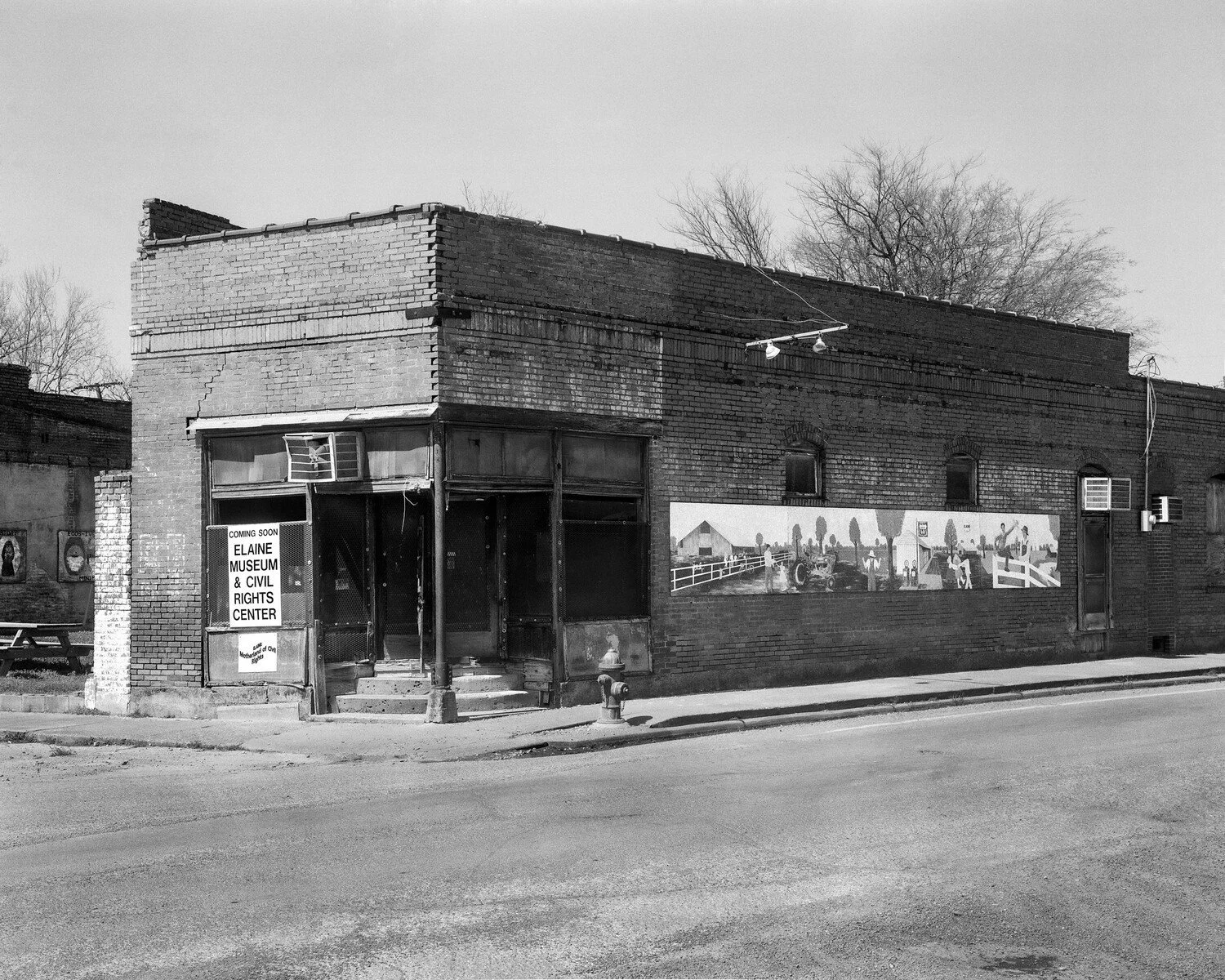
In 2021, the city of Elaine received a grant from the National Trust for Historic Preservation to develop The Elaine Museum and Richard Wright Civil Rights Center. However, the construction has ceased and will not continue. Today, the building does not look much different than it did in 2021. © Harlan Bozeman / CatchLight Global

Elaine, Arkansas, 2021. © Harlan Bozeman / CatchLight GlobalPhoto: © Harlan Bozeman / CatchLight Global Fellow

Elaine, Arkansas, 2020. © Harlan Bozeman / CatchLight Global

When I first saw the tree I could tell it was slowly dying, I just didn’t think it would be so soon. James White, a local historian and lifelong resident of Elaine, told me about the tree in October 2020. It had been there his whole life and according to his grandfather and several other residents of Elaine, it used to be the hanging tree for the white residents of Phillips County. The hanging tree rests less than five minutes away from the location that sparked the Elaine Massacre. A hundred years later in 2019, Black residents of Elaine wanted to plant a commemorative tree only to have it chopped down weeks later. The second tree they planted mysteriously rotted and died. But the hanging tree lives for now, bearing the weight of memory on its sunken limbs. © Harlan Bozeman / CatchLight Global

A wildly distorted representation of slaves’ involvement in the Civil War. West Helena, Arkansas, 2021. © Harlan Bozeman / CatchLight Global

West Helena, Arkansas, 2021. © Harlan Bozeman / CatchLight Global


Elaine, Arkansas, 2023. © Harlan Bozeman / CatchLight Global

Elaine, Arkansas, 2021. © Harlan Bozeman / CatchLight Global

When this long-term project began in 2020, children in Elaine had been attending school in a town about an hour away twice a week due to COVID-19. Elaine, Arkansas, 2021. © Harlan Bozeman / CatchLight Global


Elaine, Arkansas, 2020. © Harlan Bozeman / CatchLight Global


A shadowed figure sits on a staircase holding a water gun. Elaine, Arkansas, 2020. © Harlan Bozeman / CatchLight Global

Elaine does not have enough resources and since the town’s school district closed in 2005, sustaining a place for Black children was never a priority for the city council. Elaine, Arkansas, 2021. © Harlan Bozeman / CatchLight Global

A majority of the children in Elaine had never heard of the tragedy that occurred there. Not only was this astonishing but it also made me realize the lack of education and history these kids are forced to deal with. They did not, at the time, understand the levels of inequity in their lives such as why their mayor was never elected or why the memorial resides in Helena, the county seat, and not Elaine. Elaine, Arkansas, 2021. © Harlan Bozeman / CatchLight Global

A battered police car rests in an empty drive-thru carwash along Highway 44. Law and way of life are different in the Arkansas Delta. The local bank owner has more persuasion than a city council member and a police officer can be employed by several departments. Elaine, Arkansas, 2021. © Harlan Bozeman / CatchLight Global

Harlan Bozeman
CatchLight Global Fellow (2024)
Photo by Larry Rhodes
Harlan Bozeman is a photographer, artist, and educator whose research-driven practice has focused on confronting the erasure of Black culture and histories and investigating the legacies of slavery and its aftermath in the American South. Bozeman holds a MFA in Studio University of Arkansas and a BA in journalism from DePaul University in Chicago. His work has been featured in The Atlantic, British Journal of Photography, Der Grief, The New York Times, and The Wall Street Journal. Bozeman is a Visiting Assistant Professor of Photography at the University of Arkansas at Little Rock.