


As need rises for reliable visuals, report shows photographers facing widespread financial precarity


As visuals become an even more critical part of our media diet, photographers continue to face economic precarity — a key finding of the State of Photography 2022 Report, released last week during the CatchLight Visual Storytelling Summit in San Francisco.
The State of Photography 2022 Report, authored by Tara Pixley, Martin Smith-Rodden, David Campbell and Adrian Hadland, and sponsored by CatchLight and the Knight Foundation, represents the first international study of photographers that specifically looks to understand the experiences of imagemakers from historically marginalized communities. This report builds on and reflects a broader view of the industry than the Photo Bill of Rights and its accompanying Visual Storyteller Field Survey.
“It’s always important to have a clear picture of who is in an industry and how people are experiencing the practices, policies and pay of that industry,” said Pixley, who also is an award-winning visual journalist, professor and co-founder of Authority Collective, an organization resourcing and amplifying women/nonbinary photographers of color. “Through those kinds of check-ins and knowledge building, we learn how we can improve the way we do things, the way workers are treated in a particular profession and what more can be done to better connect the work with the audiences. It’s especially important now because we are globally in a period of upheaval and radical change.”
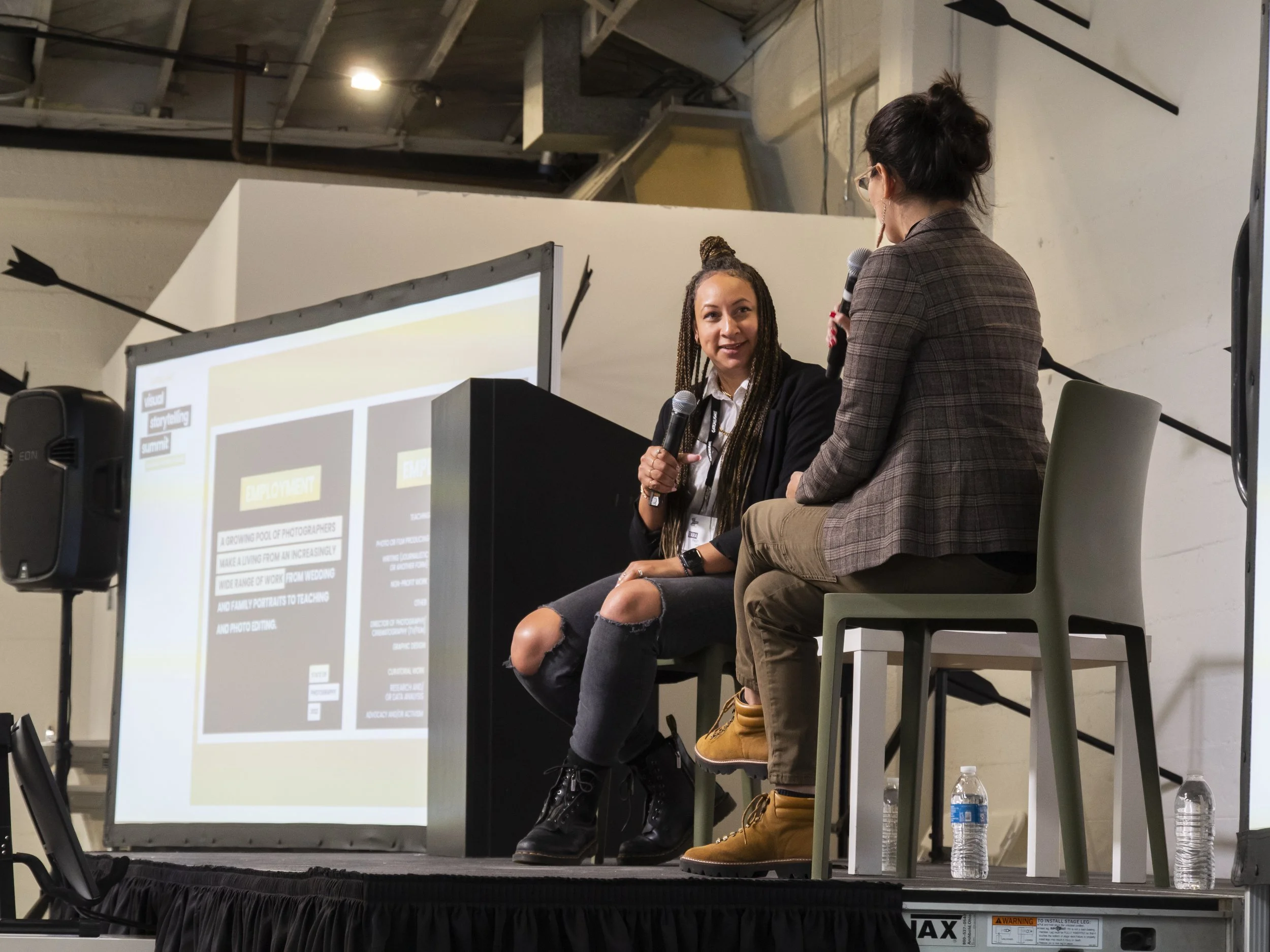
At the Summit, Pixley discussed the report in a session with CatchLight Global Fellow Daniella Zalcman, a multiple grantee documentary photographer and founder of Women Photograph, an organization which confronts the gender imbalance and inequities rampant in the photo industry. Imbalances across gender and race stood out in the State of Photography findings, too.
Pixley said the gaps in pay and access to resources along racial and gender lines were glaring.
“People from historically marginalized communities — Black, Indigenous, nonbinary, women, etc. — are making far less money, are less likely to have access to health insurance and are winning fewer professional accolades,” she said, in a pre-Summit interview. “That is shameful, and we have to address it as an industry.”
Despite these findings, both Pixley and Zalcman remained optimistic that community-building among photographers could be part of the solution.
“I was pleasantly surprised to learn that current generations are moving toward sharing resources more, collaborating instead of competing for resources and building community,” Pixley said. “That gives me hope for the future of photography and for humanity in general. We’re going in the right direction.”
Zalcman agrees.
“Community organizing is the thing we really need to stick to and rely on,” she said during the Summit session. “… Find your community and use that as a vehicle to share information and resources and build transparency.”
Still, it will take vast industry and community support to create meaningful and lasting change.
“It’s going to be a long road to address all of these issues,” Pixley said. “It will require that we first recognize we have these problems and then get to work on really rooting out from where those problems spring. It’s not enough to point people in the direction of Black or Indigenous or women photographers and say, ‘please hire these people.’ Making the world of photography reflect the diversity of our global population is only the first step. We have to actually reimagine the way we do this work, not just who gets to do it. We need to rethink our visual ethics, reframe our professional values and reassess what audiences need from visual media. The efforts toward major shifts in how photography is done — equity-focused initiatives like Photo Bill of Rights and the work Authority Collective does — are the spaces that lead necessary change. The work CatchLight is doing to build and fund local visual journalism, to recognize the power photography has to create visual rhetoric and impact the social imaginary: That is how we get to where we need to go, together.”