
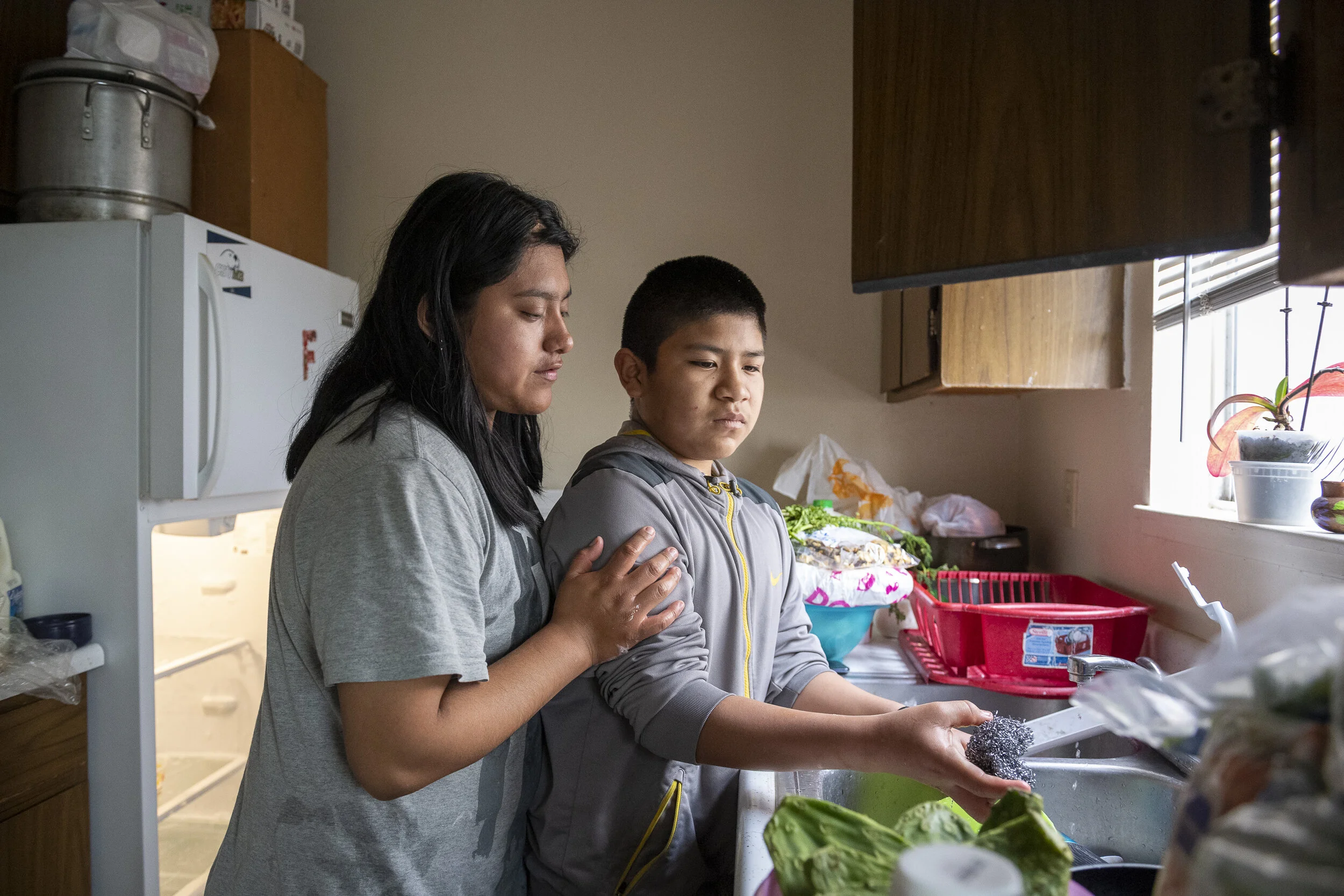
Introduce yourself: tell us who you are in a few sentences and give us a little background on your career path thus far.
I’m a photojournalist based in Salinas, Calif., and a graduate from San Francisco State University. I was born in Orange County, raised in Aguascalientes MX and Salinas. Growing up in Mexico helped me develop my multicultural perspective and having my first language be Spanish has truly connected to the community I now cover. I spent my early years living with my farm working mother and learning English. After college, I interned at the Monterey County Weekly. I was hired as the staff photographer for the Salinas Californian in October 2019.
What is one piece of advice you would give to those just starting out or looking to improve their visual storytelling skills?
Connect with your surrounding community. A lot of people think that you need to live in big cities in order to improve your visual storytelling, there are plenty of stories in your local community. You just need to get out there and find them.

What motivates you to keep making pictures?
The connections I make and the lives I’m able to impact with my work. That’s what motivates me to keep going. Visual storytelling matters because of the impact you could make in someone’s life with your photos is powerful. If you take the right photos you can provide food for an entire family.
What do you think the role is of visual journalism in addressing local issues such as the housing crisis in Salinas?
The role of visual journalists is to hold those in power accountable for their actions. Especially now, when there is discussion about police funding to go somewhere else. If you can produce impactful work, it could lead to lawmaking and major changes in your community. When protests happened nationwide after the death of George Floyd, policy makers were pressured to make systemic changes to help ensure racial equity.
My dream would be for local policymakers here in Monterey County to see the living conditions of the people working in fields that feed the nation and agree that something is wrong. Farm workers sustain our food supply, but cannot afford a lifestyle that matches the importance of their work.

What is your relationship like (i.e. any personal connections) to the community you are documenting?
My connection is deep. After moving from Aguascalientes MX, to Salinas at the age of 8-years-old not knowing a lick of English, I quickly connected with the people there. Most of my classmates were also English learners who spoke Spanish, so I didn’t feel as alienated. Now I get to cover stories in the same streets where I grew into myself. It’s definitely a nostalgic trip every time I’m out on an assignment. Waiting in line with my mom at food banks, not knowing what a real bed felt like for the majority of my childhood, and having to move from place to place, always single rooms or trailers, until finally we could afford somewhere with only my own family are disturbingly similar experiences of many people living in Salinas.
How does this moment impact how you view this project and/or how does your project help put this moment into perspective?
This moment has definitely brought to light the generational issues that have affected communities of color. Essential farm workers are getting sick, which jeopardizes the food supply of our entire nation.
This moment in history should show the country the need for these workers to be in good health. It makes this project very important right now, as it is a window into the lives of people we unknowingly rely on, and yet we allow them to live in undesirable conditions.

How do you imagine that the issue/community your project explores is currently being affected by this global moment and is the story going to change?
Food insecurity, a housing shortage, and educational inequality are nothing new. This global pandemic has just exacerbated these generational racial disparities that have always been there. Many communities of immigrants and people of color have been living with these obstacles long before we heard about COVID-19.
The characters in my story already relied on food banks as a significant source of food and were living in crowded spaces. Since the start of the pandemic, food banks have long lines and have rationed portions more strictly. Layoffs and hour reductions have caused them to need even more people living together to make rent.
Now that many more people need assistance from food banks and affordable housing due to reduced or eliminated hours and reliable internet at home because of school closures, we now see what normal life is like for countless low-income people.
For me personally, not being able to see my family as often has really affected my mental health. Constantly cleaning my gear and fighting my natural instinct to get close to people so that I can document them have been challenges I’ve learned to navigate. Knowing that I am at risk because I am still outside working around people is an added stress, but I know it’s temporary.

How did this particular project come about? Why were you interested in it?
The struggles of low-income, particularly farm working, families have always been of interest to me because they were my own reality growing up in Salinas. The work of past Catchlight Local fellow Sebastian Hidalgo and Salinas Californian Kate Cimini highlighting the housing crisis served as a jumping off point for me. My project is a modified continuation of what they started–a deeper look into the housing issues they covered, along with parallel issues such as food insecurity and education inequality that plague the lives of millions of low-income people.
What has been a specific surprise or challenge of working on this project?
COVID-19 has definitely been the primary challenge I’ve faced during this project. Having strangers open their homes and hearts to you to tell their story is already a challenge of its own. Now during this pandemic, people have been even more hesitant to tell their stories. Getting people to trust me to come into their home with a camera was a delicate process, but well worth the effort.
Pick 2 photos from your series to deconstruct: what was happening when you took the shot? Set the scene, what was going through your head?


***
This work was produced in collaboration with The Salinas Californian as part of David’s CatchLight Local Fellowship and has been published in USA Today.
Hear David reflect on his recent work during the ICFJ panel Photojournalism During the COVID-19 Era.