
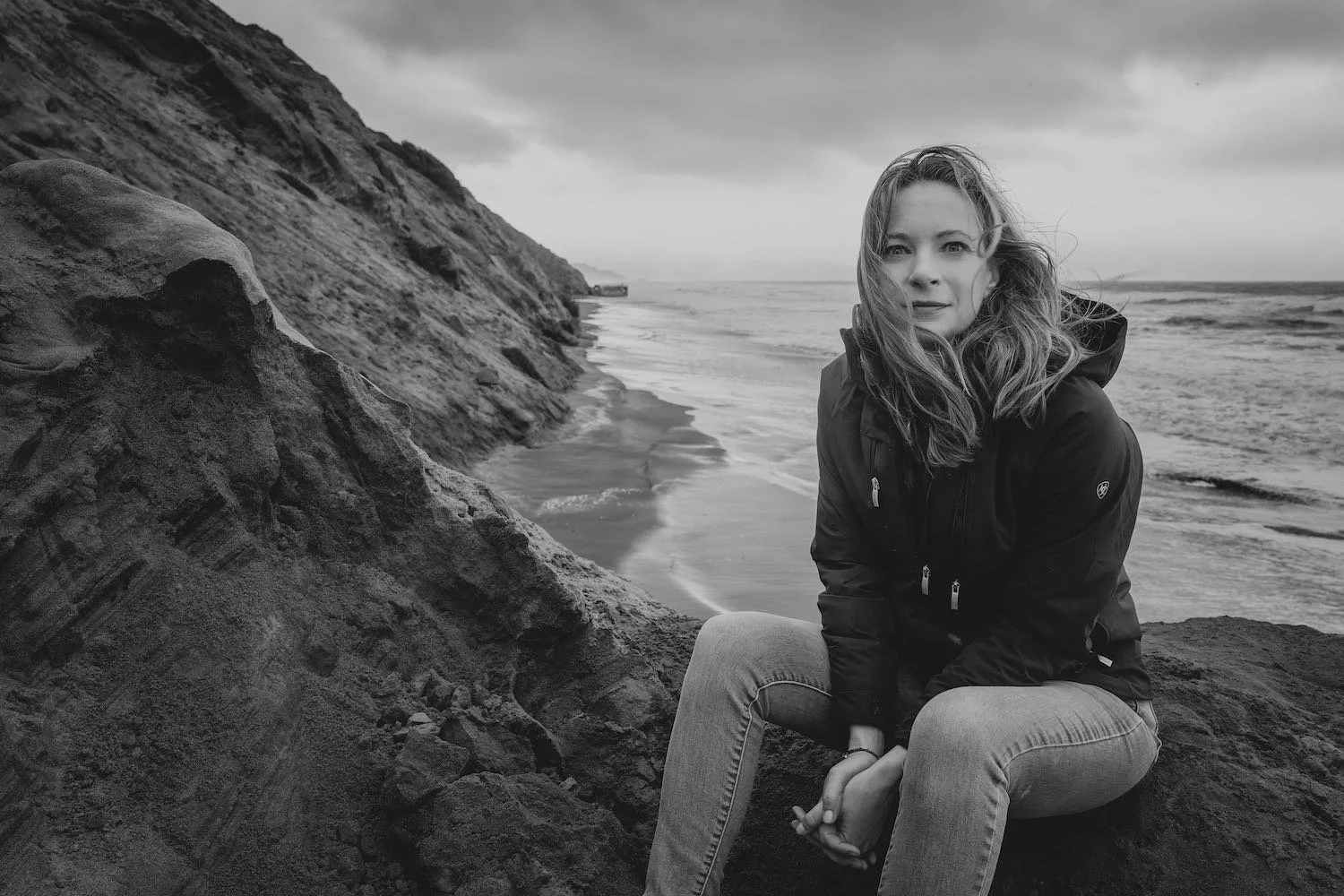
This January marked my fifth anniversary as CEO of CatchLight. Five years ago, I took on the bet, in partnership with our founder and now board chair, Nancy Farese, who started CatchLight in 2017, and our early founding team, Abby Connolly, Erica Garber, and Jenny Stratton, that we could help build resiliency for the field of visual journalism and reinforce the media ecosystem.

While the economic value of photography became more challenged in the digital media era, the importance of images to inform and connect audiences remained as important, if not more, than ever.
I worked at Getty Images for 12 years before I joined CatchLight in January 2019. I had a front-row seat to witness the profound disruption of the media and photography ecosystems.
Images went from being auctioned off exclusively to grace billboards and magazine covers to streaming through feeds in endless scrolls. Photographers went from having staff positions at media organizations or being commissioned for long assignments to great economic insecurity.
According to the 2022 State of Photography report, working photographers now struggle to make a middle-class living because of low assignment rates, debt, and the cost of living in cities where they can find consistent work.
While the economic value of photography became more challenged in the digital media era, the importance of images to inform and connect audiences remained as important, if not more, than ever, with images taking center stage in our daily modes of communication.
In the meantime, hope was also starting to shimmer. In 2016, I was a JSK Fellow at Stanford University. It was a tense year in American politics and a pivotal one for the future of American journalism. As the mainstream press faced mounting attacks and growing distrust, a new paradigm was being written.
Media companies were exploring non-profit models and philanthropy was stepping into the arena. John Thornton, co-founder of the Texas Tribune, was calling for a movement to rebuild journalism as a public service. Soon, we saw the birth of philanthropic ventures like the American Journalism Project that were dedicating resources to local news organizations.
In that context, it became evident that we could build a new model for visual journalism within the non-profit space. Since 2017, CatchLight, through our Global Fellowship program, has been investing in leading storytellers who push the boundaries of the craft, carve new paths for distribution, and some who are building future-defining institutions for the visual field.

Aïda Muluneh, whose work appears in the world’s most prestigious museums, leveraged her knowledge and power as an artist to usher in the next generation of photographers from the African continent as a mentor and founder of Africa Foto Fair.
Photo: “Strength in honor” – from the collection, The World is 9. © Aïda Muluneh

Photographer Tomas van Houtryve came to us to help start his project, Lines and Lineage, which uncovers the history of the U.S.-Mexico border. Five years later, the project has grown into a book, documentary film and curriculum.
Photo: A wave is split by fencing along the Mexico-U.S. border at Tijuana, Baja California, and Imperial Beach, California. From the project, Implied Lines. © Tomas van Houtryve

Daniella Zalcman (right), is the founder of Women Photograph, a database of women photographers around the world where editors source talent on a daily basis. Daniella is at the forefront of efforts to diversify the field, and CatchLight has been supporting her efforts to achieve sustainability for the organization.
Daniella is pictured here at our 2022 Summit in conversation with Tara Pixley, founder of the Authority Collective and co-author of the State of Photography report. Photo: Carla Hernández Ramírez
Our first task was to prove the importance of visual journalism in a world where visual editors were absent from media mastheads.
While investing in individual leaders allowed us to take bets at designing the future of the field, we also started to examine systemic issues in the industry, such as the disappearance of visual journalism at the local level. Staff positions had declined more than 52% from 2009 to 2019. Our first task was to prove the importance of visual journalism in a world where visual editors were absent from media mastheads.
In 2019, we began with a small pilot supported by the Kresge Foundation. They gave us $75,000 to place three visual journalists in full-time positions in local newsrooms in the Bay Area for three months. Our bet was that the images they produced would increase engagement from their audiences, help widen those audiences and, ultimately, help boost the sustainability of these organizations. And we were right.
Readers spent an average of 30% more time on our stories than stories that did not have images, and audiences for these publications grew, leading to more subscriptions. The Salinas Californian, for instance, more than doubled their Instagram following during the pilot.
Two out of three of our Fellows remained on staff for these publications long after CatchLight’s financial subsidy went away. David Rodríguez Muñoz stayed at the Salinas Californian for four years before joining the Detroit Free Press. Yesica Prado continues to work for the San Francisco Public Press, tirelessly reporting on unhoused communities in the Bay Area.

From the beginning, we believed the work of visual journalists would create a stronger relationship of trust between local news organizations and the communities they serve. Today, we see those important connections happening on a daily basis.
As a result of these efforts, this small pilot blossomed into a $7.5 million investment this year from key funders in journalism, creative placemaking and social innovation who are supporting our ambitious plan to build the CatchLight Local Visual Desk to serve up to 90 member newsrooms across the United States by 2027.


Our earliest community engagement events were designed around “Staying Close,” a long-form reporting project by Local Fellow, Sebastían Hidalgo. Salinas farmworkers were invited to participate in a live survey with reporters and representatives from housing resources. Their input informed both the published story and the production of bilingual tenants rights materials that were distributed throughout the community.
Photo: David Rodríguez Muñoz for The Californian / CatchLight Local

CatchLight staff welcome passersby during the installation of one of the first Artists Against an Infodemic campaign posters at Minnesota Street Project, CatchLight’s home base in San Francisco since 2019.
Photo: Elodie Mailliet / CatchLight

In 2020, we launched a second CatchLight Local Visual Desk pilot in Chicago, serving nine newsrooms in partnership with INN and the McCormick Foundation. During the pilot, we curated an exhibition featuring community photography archived by Local Fellow, Samantha Cabrera Friend, for Meeting History: A Garfield Park Citizen Archive, a project produced in partnership with ProPublica Illinois. Transparency prints from the project brought the community’s history to life at the Legler Regional Library in West Garfield Park.
Photo: Max Herman / CatchLight Local
What it took to get here was significant. We experimented through a time when much of the world was shut down. We knew it was critical to have our local journalists continue their work through the COVID-19 pandemic, as their audiences included particularly vulnerable communities such as farmworkers and unhoused residents. So we extended our three-month pilot to nine months.
To confront widespread disinformation during the pandemic, we collaborated with organizations like Dysturb, The Everyday Projects, the Stanford JSK Fellowship, and PhotoWings to launch the public information campaign, Artists Against an Infodemic.
We held each other close, organizing daily morning team calls. We took turns covering for each other when we each inevitably came to a moment of complete burnout – at times unsure how we would keep moving forward.

Building a strong sense of community has always been at the center of our work, and it continues to pay off as we grow the CatchLight Local program. Pictured here are our 2022 Local Fellows (left to right), Aryana Noroozi, Sree Sripathy, Ximena Natera, Amir Aziz, Harika Maddala, and Larry Valenzuela, at the 2023 CatchLight Benefit in Kentfield, Calif., on April 28, 2023.
Photo: Emma Marie Chiang for CatchLight
Indeed the foundation to our success through these uncertain times was the unwavering support of our initial investors and our board. They helped us push through moments of doubt or what would otherwise have been crippling financial and moral insecurity.
Today, we begin a new phase of our growth, with this incredible opportunity to help build the future of visual journalism. To meet the challenge, in 2024 we are reinforcing our operations and expanding our team. This year, we aim to bring six more newsroom members to the CatchLight Local Visual Desk. In 2025, CatchLight Local will kick off its next two-year Fellowship cycle, with plans to place 10 more visual journalists in local newsrooms across the country, bringing the total number of staff positions created to 30 by 2027.
Five years later, the bet is beginning to pay off, but the stakes are also rising. While images are commanding more and more of our attention as vehicles for information, the veracity of that information is at risk with the rapid rise of synthetic imagery and deep fakes. Our best defense against these and other threats of disinformation are connection and authenticity — the underpinnings of local visual journalism that AI can never replace.
Will you share a moment to help us design our future?
