
Introduce yourself: tell us who you are in a few sentences and give us a little background on your career path thus far.
I am a narrative storyteller who seeks to connect people to the value own of their own inner life and to see this same goodness in others. The goal is to break down the perceived difference of the other, building a bridge not merely to acceptance but also embracement. While we can not control how work lands and what effect it has, this is my intention. I started my career at 36 after a life as a stay-at-home parent and High school teacher. To combine my love of social justice, art and travel was the motivation.
What is your earliest memory with photography?
I don’t know what my actual memory of photography was. Taking photos at music concerts in high school became a way to concretize the moment and to say I was here, and this mattered.
Two photos shook me to my core as a child. One was a photo from the holocaust-it terrified me. How could the people in the picture be alive and how other humans could make and let that happen, my mind wondered? The surrounding adult culture did not know how to have these conversations-it left me horrified. The image could have used it for talks about humanity, lessons about oppression and justice, and messages about how one gathers one’s inner resource to move forward during hardship-that was not a part of the understanding. Instead, it became a vehicle to foster fear and hatred. The power of the image to show truth without commentary, leaving the viewer to wrestle with their internal navigation, also became apparent.

Describe your approach to visual storytelling?
My work draws from my experience as a queer person growing up in a world that did not welcome me as a parent and Buddhist practice. It also draws from growing up with learning disabilities and often having to think outside the box to accomplish things.
I start with a question; a curiosity. There is something I want to understand — my approach presupposes that I don’t know. I intend to be as present as I can; to bring myself to the moment. There is a lot of improvisation. I seek to both celebrate the person in front of me and my goals with the project.
What is one piece of advice you would give to those just starting out or looking to improve their visual storytelling skills?
Follow what you love, what you are curious about, and do this with an open heart and mind. Use what you know and your strengths. What story is it you can tell that no one else can in the same way? Learn how to listen to the communities you are telling stories about, especially when you hear criticism. Be mindful of stories that are not yours to tell.

How did this particular project come about? Why were you interested in it?
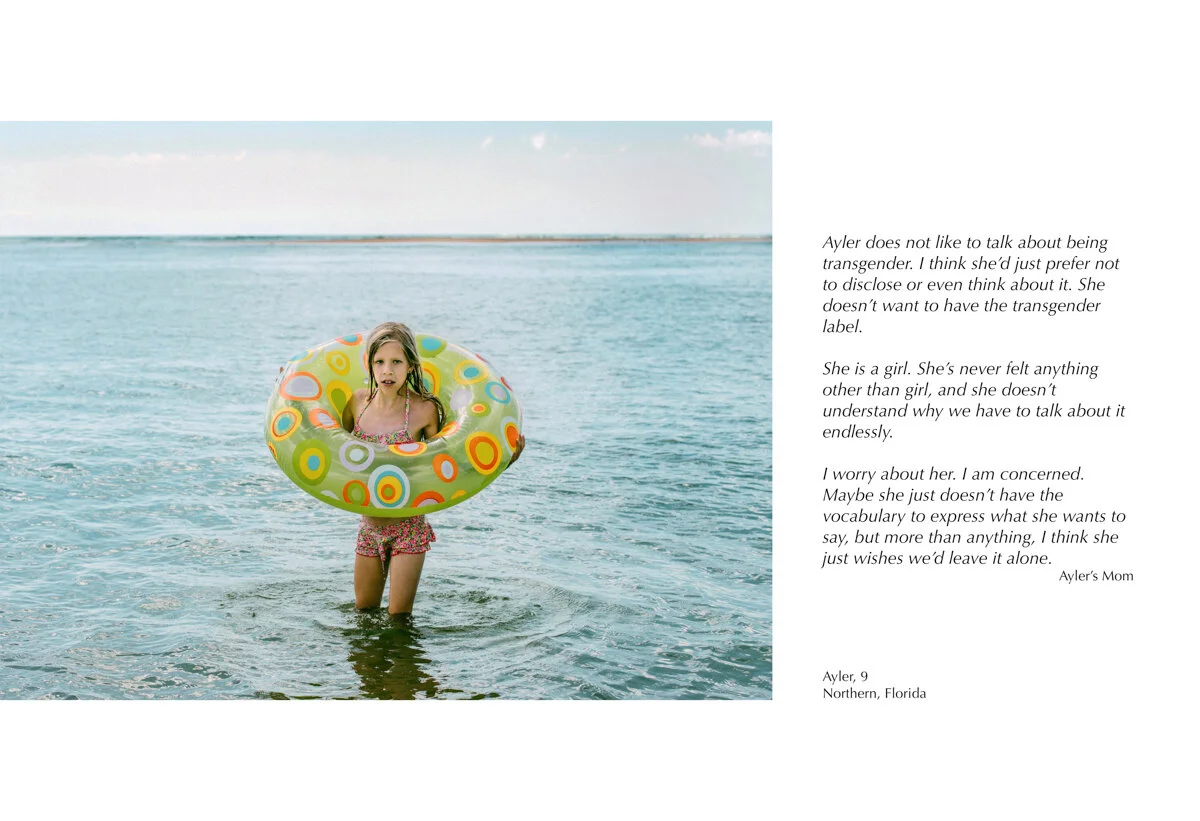
I wanted to look at living one’s truth, know what living authentically looked like, and the consequence of such. I had a notion that if we could celebrate and be our true selves, there would be less cruelty in the world. My question was-Is the destruction, prejudices, and hate that I saw a partial result of being separated from our own inner experience? Would acceptance then lead us to a more caring world?
How does this moment impact how you view both yourself as a visual storyteller and your project?
I see so much grief and pain and want to tell stories that help people heal. I also understand that things are being cracked open. That the world is made apparent, and this may be a time where it is possible to have work show up and be received differently.
What has been a specific surprise or challenge of working on this project?
What most people find interesting is the project led me to discover my gender identity. What most speaks to me is the impact that we can have as individuals on the greater good.
Pick 2-3 photos from your series to deconstruct: what was happening when you took the shot? Set the scene, what was going through your head?

Zak and his younger brother Kade pictured here near their home in The Isle of Wight, England. Kade was running around while I talked to Zak and his mom. When Kade fell and started crying, as kids do, Zak ran and comforted his brother almost the way a parent would. Not prepared to shoot, I pulled my camera up and pushed the shutter. The settings were wrong; the background messy, but it conveyed perfect emotion.
This photo illuminates Zak’s heart. He is kind and fierce and reminds me gender norms are taught-not fixed. Some in society tell Zak he is less than any other boys and can’t determine his gender-Why? I want more men and boys that care like this. Don’t you?

Azaj and I were walking around Oakland, chatting, and looking for spots to create. The wisdom, clarity, and gratitude that she held a young person kept surprising me. As I have to do with almost all teens, I was trying to get her to stop posing, and this takes quite a bit of time. They are so aware of posing and Instagram and how they “should” look. Mindful of the violence that trans women of color face- a trans woman of color is murdered nearly every day some in the world-I asked her if it was something she thought about daily. She did not hesitate with a yes. And we spoke for a while. I tried to imagine what it might feel like to live in her experience. I can never know how it feels to be in another’s shoes, but I can attempt to imagine. Then we came to this block, one street away from where my daughters were living. The contrast of the colors, home, and nature and the graffiti on the fence just felt right. I took a few frames, and she just seemed so present. I can see the layers and complexity of how she is and will become here.
What motivates you to keep making pictures? In one sentence describe why visual storytelling matters to you.
Visual storytelling matters because when we can’t move towards wholeness until we see ourselves and our truths reflected in the world.