
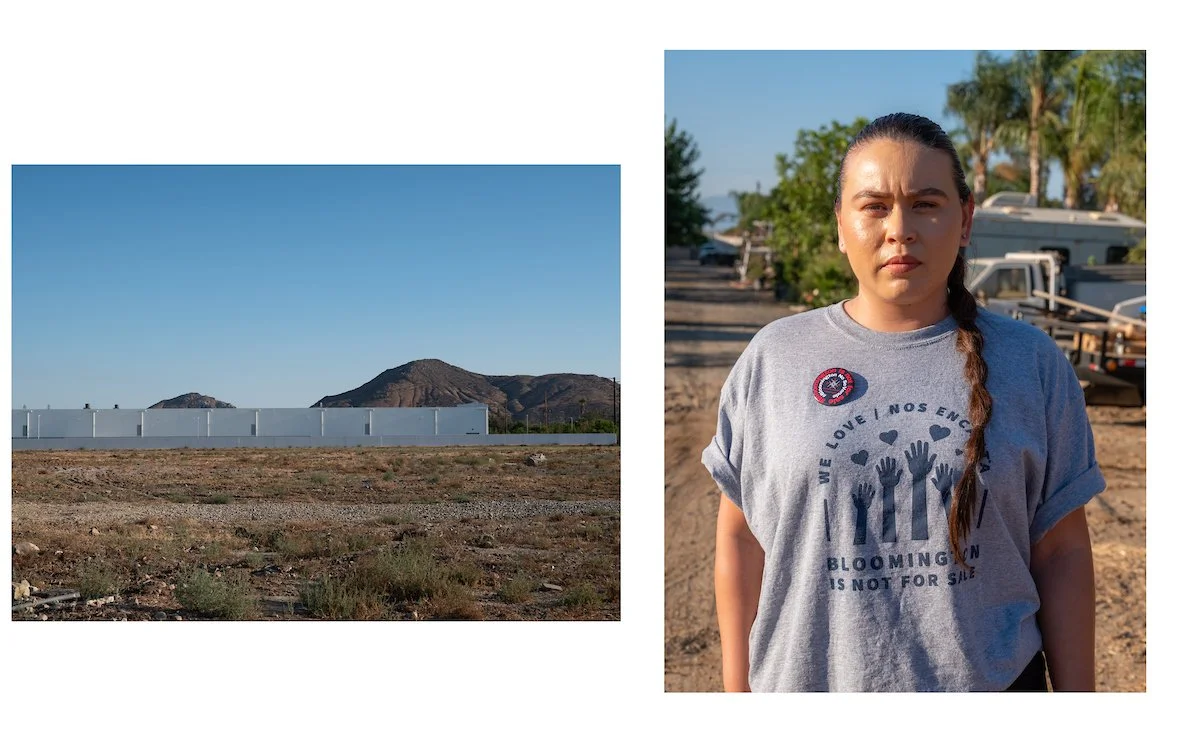
The warehouses of the Inland Empire are shipping hives that blanket the surrounding environment with noxious emissions. These massive facilities butt against homes, small family ranches, and schools, most often in communities of color.

Black Voice News, a Riverside-based news outlet that serves communities of color in southern California, is tackling this ongoing story with CatchLight Local Fellow, Aryana Noroozi, the newsroom’s first full-time photojournalist in its 50-year history.
“Like almost any other issue, minority communities are the most impacted,” says Stephanie Williams, executive editor of Black Voice News. “There’s not a whole lot of political power to fight back, and they already are the ones suffering the worst from heart disease, asthma, chronic obstructive pulmonary disease, and all other kinds of lung conditions.”
Noroozi brings a unique power to the investigation. Her visual reporting shows the human toll of the economic decisions that shape a community’s landscape. It casts light on the entwined crises of corporate dominance, racial inequality, and environmental destruction. And through images of beloved local culture and traditions, readers see what the residents have to lose.

“I want to present new information through the images I make,” Noroozi says. “These images allow for the experiences, realities, and truths of others to be highlighted and educate people who are not fully aware of an issue or experience. I believe this understanding can help foster unity.”
Williams notes that reporting on warehouses and shipping pollution typically revolves around data and expert analysis, but photojournalism helps frame the issue for people who aren’t experts, especially those who are most affected by these harmful conditions.
“It puts faces on the people being impacted. You see the story and say, ‘Oh, that looks like my neighbor, that looks like my co-worker, that’s my mom or that’s my sister.’ That, I think, evokes compassion. Then compassion evokes concern and interest and all of those things you need to get people inspired and motivated to want to make a difference.”

Carolina Verduzco and her daughters pose for a photograph a warehouse protest in Bloomington. Verduzco, a 34-year Bloomington resident, says her rift is not with the warehouses, but rather their placement near where people live, work, and go to school. (Aryana Noroozi, Black Voice News/CatchLight) 
Ana Carlos poses for a portrait while tabling for the Concerned Neighbors of Bloomington. Carlos, a local teacher and is organizing to block more warehouse developments near homes and schools and stop the displacement of families. (Aryana Noroozi, Black Voice News/CatchLight) 
Bloomington ranchers gather on horseback at the David Jayne Equestrian Arena after a march against warehouses on September 18, 2022. Warehouse developments are a growing threat to Mexican ranch culture across the Inland Empire. (Aryana Noroozi, Black Voice News/CatchLight) 
A local equestrian wears a traditional Mexican dress as she rides her horse at the David Jayne Equestrian Arena after a protest against warehouses in residential areas. Warehouse developments are a growing threat to Mexican ranch culture across the Inland Empire. (Aryana Noroozi, Black Voice News/CatchLight) 
Members pose for a group portrait at a community health fair hosted by the Warehouse Worker Resource Center. (Aryana Noroozi, Black Voice News/CatchLight) 
Javier Lopez stands outside of KSBD, the Amazon air hub warehouse. “Unfortunately, a lot of us didn’t have either personal time or unpaid time to join the protests. But I’m here for them, I’m there with them,” said Lopez about his coworkers at Amazon. “We are the people, we have the power to support each other. Take care of one another.” (Aryana Noroozi, Black Voice News/CatchLight) 
Andrea Viduarre, an activist with The People’s Collective for Environmental Justice, poses for a portrait during the picket in front of KSBD, the Amazon air hub warehouse. “When we think about environmental racism, the worker is the frontline,” she said. When this Amazon facility was opened, environmentalists asked Amazon to “come to the table” to agree to implement prevailing wages, not union bust, invest in the right technology in order to ensure their pollution footprint would not add to the pre-existing detrimental air quality of the area. Viduarre says Amazon refused to have the conversation. (Aryana Noroozi, Black Voice News/CatchLight) 
Ricardo Cisneros, member of the Inland Empire Labor Council, poses for a portrait on the picket line outside of KSBD, the Amazon air hub warehouse. The Inland Empire Labor Council represents 94 unions, with over 398,000 members. Cisneros describes Amazon as a “low road employer,” one that is not paying fair wages. (Aryana Noroozi, Black Voice News/CatchLight) 
Amazon workers chant as they march the picket line in front of KSBD, the Amazon air hub warehouse, in protest of unfair and unsafe working conditions and to demand living wages. (Aryana Noroozi, Black Voice News/CatchLight) 
Juan A. poses for a portrait beside the front gate of the Amazon warehouse where he works. He said his greatest struggle as an Amazon worker is being able to make a living. (Aryana Noroozi, Black Voice News/CatchLight)