
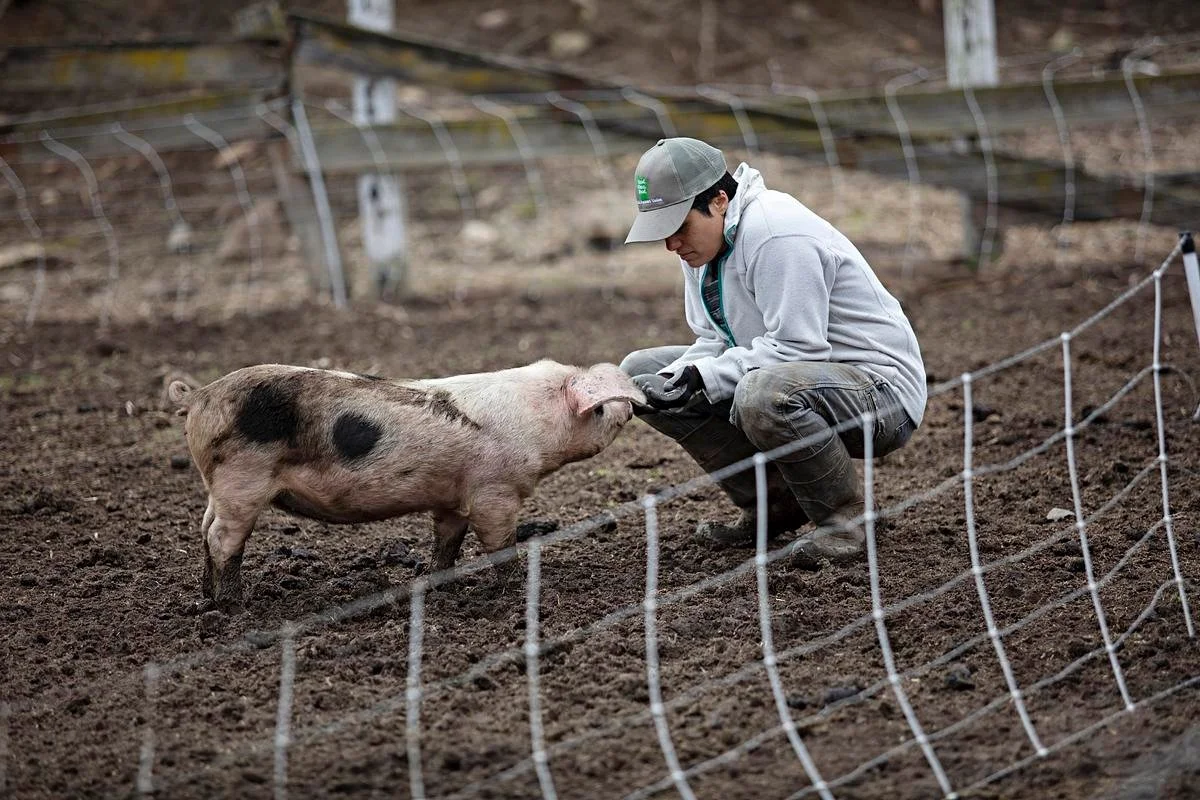

The Local Food Purchase Assistance program gave small farmers a rare safety net — two-year grants to help them expand their herds, invest in equipment, and strengthen local food systems. But this spring, the Trump administration abruptly gutted the program at the start of the growing season, leaving many livestock farmers scrambling to adjust.
On her farm in southern Wisconsin, Jess D’Souza had already committed to raising her herd of Gloucestershire Old Spots pigs. Wisconsin Watch staff writer Bennet Goldstein and photographers Patricio Crooker and Joe Timmerman spent days documenting life on her Wonderfarm, capturing moments of survival, loss, and resilience.


Timmerman recalled the intimate details of daily life: D’Souza stroking the ear of her “mama pig,” Candy; digging through packaged meat in her basement; and resting against a wooden chair with her morning coffee.
“Jess’ hands, cracked with grit, felt like a powerful symbol of the meaningful care that goes into the farming lifestyle,” Timmerman said. “Seeing how Jess interacted with her larger-than-life Gloucestershire Old Spots pigs really put the gravity of the situation she’s facing into perspective for me.”
The newsroom wrestled with whether to publish graphic images showing how food travels from farm to plate. After much discussion, the editorial team agreed that showing the realities of agriculture — including its uncomfortable truths — was essential to grasp the full story of working on a farm.

“Jess herself opened up about her own sensitivities in slaughtering animals that she sometimes treats as pets. Leaving the slaughter out of this narrative or sanitizing it would have omitted a key piece of this intimate portrait of a farmer,” said Managing Editor Jim Malewitz.
For Goldstein, the visuals worked hand in hand with the reporting, adding depth that steered away from an idealized picture of farming and food production.
“I didn’t have enough words in my pocket to capture all the colors and sounds that live on Wonderfarm,” he said. “In journalism, a saying that less is more especially holds true for narrative stories. The photos helped carry the load.”

The story drew strong attention from readers. It became one of Wisconsin Watch’s most-read features of July and sparked active conversations online. Farmers expressed gratitude for the reporting, while readers said they appreciated the content warnings that accompanied the more graphic material included in an accompanying video piece.
Through close collaboration, Wisconsin Watch provides a vivid look at a farm and a food system under pressure. This story reminds us that behind every policy decision are communities and landscapes that bear the weight of change.
As Timmerman put it, “Beyond the political party lines and alphabet soup of policies or programs impacting hardworking people like Jess, I hope readers can relate to the humanity that shines through in these pictures.”