
Just a few years ago, AI hovered at the fringes of the CatchLight Visual Storytelling Summit. Today, however, the technology has become central to many conversations about photojournalism and image creation.

“In 2023, AI in photography still felt like a curiosity,” said Alessia Glaviano, head of Global PhotoVogue and director of the PhotoVogue Festival. “Now, it has become an unavoidable part of the conversation. It’s no longer a question of technology, it’s a question about creativity, authorship and trust.”
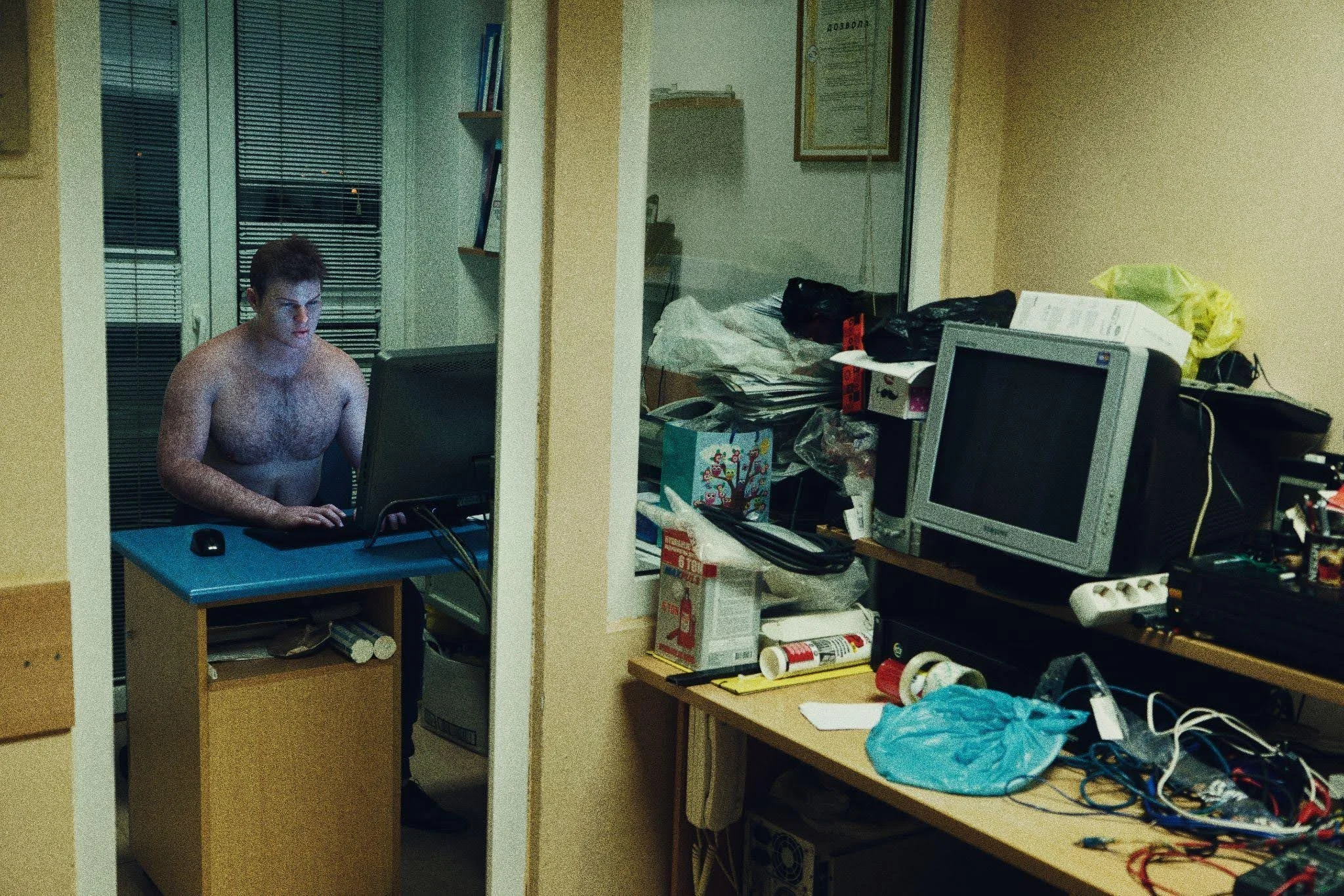
At the 2024 summit, Glaviano juxtaposed AI-generated fashion images — which she applauded — with photos from The Book of Veles by Jonas Bendiksen, a project that appeared to document a Macedonian town producing fake news that was featured at the 2023 CatchLight Visual Storytelling Summit. Though accepted at first by the photographic establishment, the book was a complete farce — a sneaky work of satire made with AI-generated text and images.
Bendiksen explained his motive at the 2023 summit:
“The idea was to use it as sort of an experiment to see, well, how long does it take before I get caught red-handed. I mean, there was kind of lots of hints, you know? There were bears walking around, and junk text, and really kind of badly made images all over the place. I thought it would take two, three weeks, and somebody would get suspicious, I would get caught … and I would launch the book in this conversation, basically like we’re having right now. This plan completely failed. Everyone thought this was a wonderful piece of photojournalism.”
In order to “find a way out of this pickle,” Bendiksen extended the prank, exposing himself with a fake social media account.
If anything can be faked, then nothing has to be real.
— Hany Farid

“It’s crucial to make distinctions between genres,” Glaviano said. “In art, AI can be an incredible tool for experimentation. But in photojournalism, the integrity of an image is sacred. The line between what is real and what is fabricated must never be blurred.”
AI tools have rapidly advanced in the last year. Users can now generate photorealistic images, clone voices, and manipulate video with little technical skill. That accessibility raises concerns about misinformation and trust.
Hany Farid, a digital forensics professor at UC Berkeley, said during the 2023 Summit that ability leads to what he calls a liar’s dividend: “If anything can be faked, then nothing has to be real.”

Farid, Glaviano and others point to technical safeguards as a partial solution. Initiatives like the Content Authenticity Initiative, discussed by Johnathan Dotan at the 2022 Summit, and C2PA embed metadata in images to verify their origins. Camera makers and platforms like Google are adopting invisible watermarks to flag AI content.
Technology alone, however, can’t solve the trust problem.
“Literacy is the other big piece,” said CatchLight board member Shazna Nessa. “Generally what we see is what we believe. When you see the image, you remember the image. You don’t necessarily remember a footnote that says, ‘This was generated by AI.’”
AI is the Wild West — there are a lot of unknowns. But before anyone bans it, they need to understand it.
— Kira Pollack
Nessa sees potential for AI in journalism — but not in generating images. Instead, she sees value in AI’s ability to uncover patterns, surface data, and assist in investigative work.
Recently, Kira Pollack led a workshop around AI aided archiving for CatchLight at Photoville in New York. Pollack, who has held roles as deputy editor at Time and creative director at Vanity Fair, sees potential in AI—not for creating images, but for supporting traditional photographers.
As the Walter Shorenstein Media & Democracy Fellow at the Shorenstein Center on Media, Politics and Public Policy, Pollack is exploring how AI can act as an assistant in the often overwhelming task of archiving photographs. Working with photographers such as Christopher Morris, she is examining ways AI can streamline processes like organizing collections and writing captions.
“There’s so much work that needs to be contextualized by the photographers,” Pollack said. “AI can help with that, like caption writing.” Pollack encourages photographers to learn as much as they can about AI so they can adapt it to their needs. “AI is the Wild West — there are a lot of unknowns. But before anyone bans it, they need to understand it.”

Photographer and visual researcher Alexey Yurenev offered a metaphor for AI’s power during the 2023 panel with Farid: “The difference between a weapon and a tool is how you hold it,” he said. “It’s undeniably destructive, but it also carries fantastic fictional potential. And it gives photography a chance to evolve — to be something else.”

A year later, we invited artist Phillip Toledano to the mainstage to further explore the creative potential of generative AI for fictional storytellers. In a humorous, if not mildly controversial, talk entitled “Slightly Bent Reality,” Toledano shared projects that serve not necessarily to inform or educate, but to express an artistic vision and even confront and interrupt prevailing political narratives.
“We’re at kind of a fascinating point historically where…everything is true and nothing is true because of the spectra of AI,” he said. “That’s what this work is about, and I’m quite curious to see if that will matter … because I feel like in some ways we are so committed to our ideals, we’re so committed to our tribes, that what we see won’t change our minds. Maybe this idea, this fear we have of [AI], will be misplaced — or maybe not.”
• • •
To learn more, check out a playlist of CatchLight Visual Storytelling Summit AI talks below.
Source: https://www.catchlight.io/summit-generative-ai-playlist