
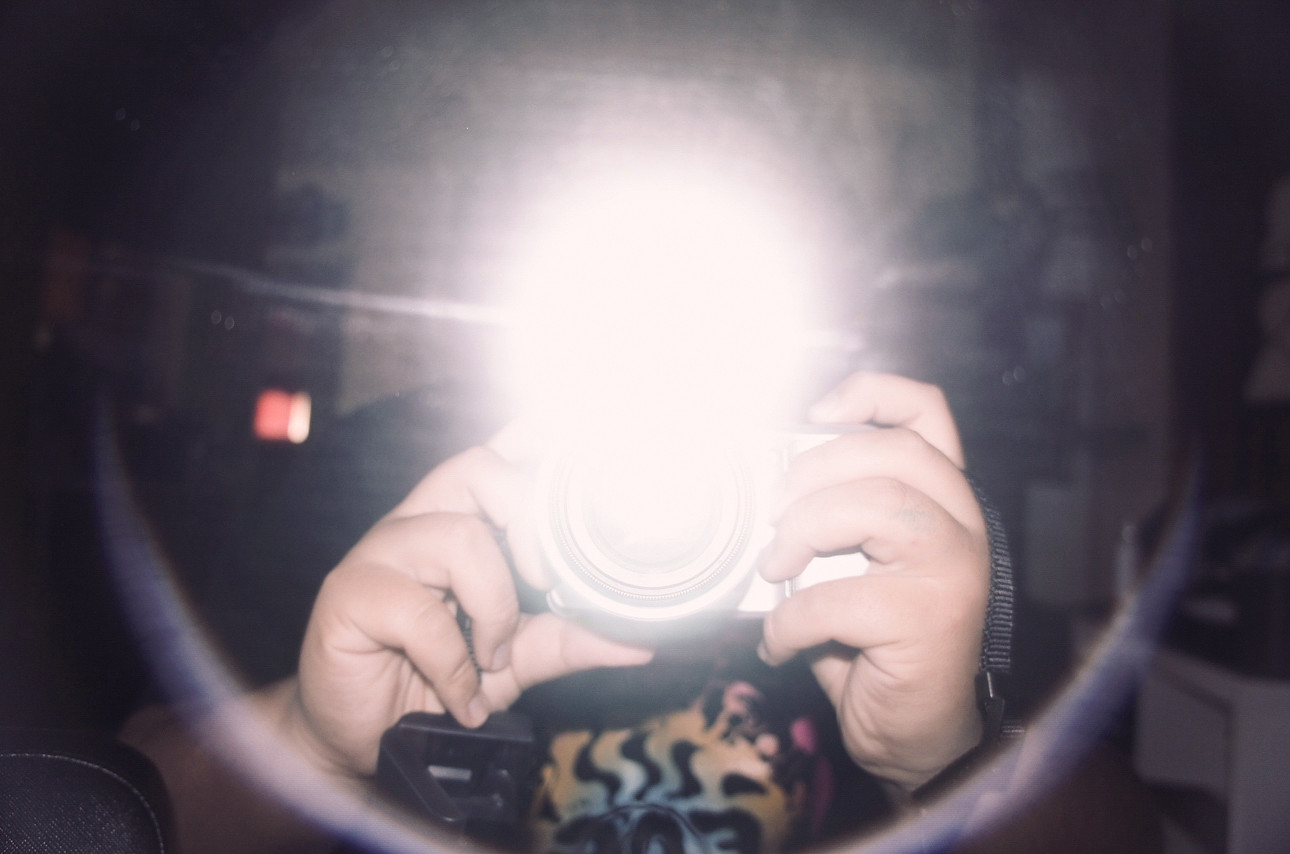
Since June 2025, CatchLight Focus: Mental Health, our first issue-specific visual desk, has worked with 20 local newsrooms along with statewide and national media partners on stories that have reached nearly a million people and changed policies and the way communities see one another.
Mental health is among the most difficult subjects in journalism to photograph. So much of it happens out of sight: behind closed doors, in a thought someone has never said out loud. The people living it are often at their most vulnerable, and many have learned that being seen can come at a cost, from a neighbor’s judgment to a job put at risk.
Even if unintended , a photograph can deepen that stigma, reducing a person to their worst moment. However, when done with care, visual storytelling can do the opposite. It can help someone feel less alone and help a community understand what needs to change. The difference comes down to creating structures for visual journalists to spend time and build relationships. The difference comes when photographers are empowered to trust their own instincts; knowing when to make a picture and when to put the camera down. The difference is created when photographers are given the space to let people tell their stories and show them as whole people rather than as examples of a problem.
That is the work our photographers and editors do every day, and every story below began with that kind of care.


In February, a group of Oakland high school students sat down together to talk about what weighs on them. The conversation turned to grief, pressure at school, social media, immigration, families stretched too thin to spend time together. Over the next three months, with visual journalists and editors from CatchLight and KQED, the students turned those conversations into photo essays during a workshop in CatchLight led in partnership with YouthBeat, an Oakland youth media organization.
Each student made images of someone whose care sustains them. Diego, a senior, photographed his mother, Rosa: her faith, her home-cooked meals, the rides to school and to medical appointments. Korey, a sophomore, documented his mother, who shows him how she looks after her own mental health. Nhien, a junior, photographed the boyfriend who taught her to open up. “He taught me that being vulnerable is not weak, but a strong trait,” she wrote.
The essays were published on KQED’s website during a time when several medical groups were calling attention to the national emergency of youth mental health. The approach offers something statistics cannot: young people showing, through their own lens, what helps them through. These were not the typical teen mental health stories told about young people. In these essays, they told their own.
That is what we built CatchLight Focus: Mental Health visual desk to do. In June 2025, it was an idea: a visual desk devoted to the many ways mental health shapes our lives, from growing up and growing old to finding care for someone in crisis and the long work of recovery. Mental health is one of the defining stories of our time, yet too often it is told through statistics, or not told at all. We believed that photographers and editors, working alongside the newsrooms that know their communities best, could help change that.
Eighteen months later, that idea has become a body of work people are reading, sharing and acting on.
Stories people stay with
When readers meet the people at the center of these stories, they stay. Across every story the desk has produced, engaged time has run two to three times higher than the publishing newsroom’s site average. At The Marshall Project, it reached the 97th percentile. One CalMatters story drew more than 100,000 readers in its first 48 hours, roughly double the outlet’s typical first-days traffic.
3x
Up to three times the engagement time on Mental Health visual desk stories
97th
Percentile for engagement time on The Marshall Project’s website
2x
First day traffic on CalMatters story profiling a woman serving life for a DUI
75%
Percentage of partners reporting higher republish rates than average
The work also travels. About three in four of our media partners say its stories are republished more often than their typical work, and they are among CatchLight’s strongest performers on social media. Social posts, video reels, a newsletter series and direct outreach to communities help each story find the people who need it most.
Some of the stories readers stayed with longest are also among the hardest to tell.
A place of peace
Before practice begins at California Medical Facility, a state prison in Vacaville, the players gather in a circle to share news and encouragement. The team brings together incarcerated men who use wheelchairs and able-bodied teammates who chose to play beside them. They are coached by the head coach of the Sacramento Rollin’ Kings wheelchair basketball team and the founder of the non-profit Capital City Adaptive Athletes Foundation Mieko Chambers and by two-time Paralympian Joe Chambers with supporting coach Jeremiah Holland. The program was built on an idea painted on the gym wall: recreation as re-creation, a chance to practice becoming someone new.


Quentin “Q-Tip”Murphy found the team after some of the darkest years of his life. He now calls the gym “a place of peace.” Larry Roach, an inside coach who spent more than two decades in prison, came home in October to a party his family threw in his honor. His coaches were there, and he wants to stay involved with the team.
Photographer Brian L. Frank and reporter Aala Abdullahi’s story ran in October with The Marshall Project, KQED and CalMatters, weeks after Gov. Gavin Newsom signed the Second Chance Sports Act, which directs California’s prison system to plan for more sports programs. In a season when many of us reflect on what we owe one another, it is a story about second chances and the people who make room for them. It is also a reminder that caring for mental health does not only happen in a therapist’s office. Sometimes it happens on a prison basketball court, early in the morning.
When a story changes something
Attention matters because of what it can make possible.
In Shasta County, Calif., the jail had gone more than ten months without in-person family visits when Shasta Scout documented the pause and what experts warned it could mean for the mental health of people inside. Days after the story was published, the sheriff’s office announced that in-person visits would resume.
CalMatters published its CARE Court series with visual reporting from the desk by Florence Middleton, following families trying to get help for loved ones in crisis. The California State Senate then unanimously passed SB 1016, which would have allowed a judge to order a mental health evaluation when a person’s illness is more severe than CARE Court, a voluntary program, can support. The bill stalled in the Assembly in August, but the question the series helped bring forward, how to reach people too sick to accept help, remains part of the conversation in Sacramento.


Building something that lasts
CatchLight Focus: Mental Health was built as a partnership from the start. Since June 2025, the desk has worked with 20 partner newsrooms on 91 pieces of coverage, reaching nearly a million people. By the end of the initiative, it will have awarded more than $150,000 directly to local newsrooms, so that this reporting can be done by the people who live closest to it.
20
Newsroom partners in 18 months
91
Pieces of content reaching nearly 1 million people
$150K
Awarded directly to local newsrooms
That model, a dedicated team of visual editors and creative producers working shoulder to shoulder with local newsrooms and national media partners on one urgent issue, is something we are proud of and want to grow. In the year ahead, the desk will keep making work with the communities it covers, and we will carry what we have learned into new themes and new places.
How we see one another matters
The Oakland students showed us something simple: the people who help us through hard times are often the ones who see us most clearly. Every story the desk has published began with someone allowing a photographer to see them, at a hard moment, in a hard place. That trust is what makes this work possible, and it is what your support protects: a photographer with the time to earn it, an editor on the other end of the line, and newsrooms with the resources to tell these stories well.
Please consider a gift that feels meaningful to you this season. Whether or not you can, thank you for looking closely with us this year.
The work of CatchLight Focus: Mental Health wouldn’t be possible without the generous support of


Banner Image:
My name is Diego. I’m my mother’s son, and I see myself through the images I capture.
Photo: Diego Sanchez Morfin / Catchlight YouthBeat Youth Mental Health Workshop