
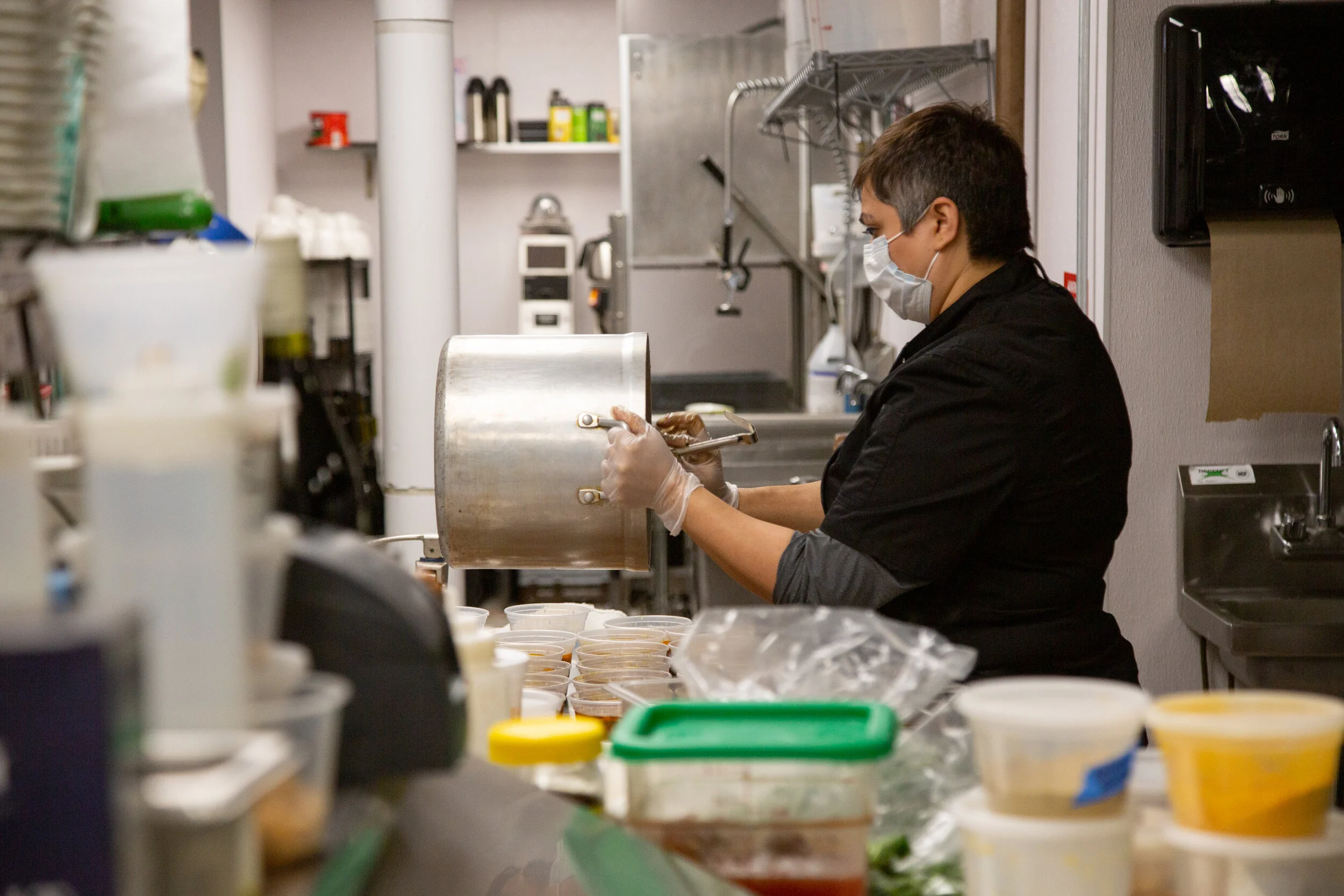
On May 20, 2021 CatchLight Local Chicago Fellow Woojae Julia Song shared with CatchLight’s Jenny Stratton more about her project, fellowship experience, and insights on local visual journalism:
••••••••
Introduce yourself: tell us who you are in a few sentences and give us a little background on your career path thus far.
I am a young, immigrant Asian American woman making home in Chicago and South Korea. I tell local stories focused on migration, policy and food using multiple mediums. I’ve reported on housing in Chicago; conducted archival research for Kartemquin Films and created nonfiction videos and a podcast as a freelance producer and editor. Studying Asian American studies and journalism as well as working at Chicago-based community organizations during college definitely shaped my interests. Although the Catchlight fellowship is my first professional experience with photojournalism, I first started taking photos in high school.
What do you think the role is of visual journalism in representing community issues (such as the impact of COVID-19 on immigrant owned businesses?
When done with care, visual journalism can help improve public understanding of an issue like the shortcomings of the PPP program; contribute to nuanced records of the people and communities experiencing the issue and make stories more accessible to different audiences. Strong visual journalism can also impact a reader’s decision to click on a story link on social media, keep people engaged and create an entry point for audiences offline.

How did this particular project come about? Why were you interested in it?
I originally pitched a project that was an odes to “third places” Chicago lost during the pandemic, which we shaped into a project profiling immigrant-owned businesses in Uptown. I saw little visual documentation of neighborhood restaurants, especially those in immigrant neighborhoods and communities of color, in media coverage. I wanted to share stories in the specific context of Uptown and create photos of people and daily work (vs. just a building exterior, safely) that the participants and the community could view with dignity.
What has been a specific surprise or challenge of working on this project?
As someone who had only reported virtually during the pandemic, learning how to navigate in-person photography in indoor settings and remotely (communicating safety risks and comfort levels regularly, working quickly and managing my own anxiety) was a significant challenge.
How did engagement play a role in your project? What did your community activation look like/how was it received?
I reached out early to community members to field potential participants. Axis Lab, a local community organization that connected me with potential sources, supported logistics for the community activation and introduced the project to a wider audience. Translating the feature stories into Spanish meant that Hugo, one of the participants, could both read the story about his restaurant in the language he prefers and share the story with his family and community.

The activation with CatchLight was an outdoor photo exhibit that used the windows of a community event space in Uptown. We promoted the event online and offline, included captions in three languages to reflect the participants’ primary languages and shared food from the featured restaurants with visitors.
Tell us about working as part of the CatchLight Visual Desk? Share any learnings you came to through this process?
Everyone I photographed during the fellowship, for shorter assignments and my longer project, helped me work more transparently. Knowing I was asking people to share valuable time and energy during a global pandemic, I asked for consent throughout the process while staying persistent. I also learned to prioritize sticking to safety constraints over trying to get “the” perfect photo. I practiced how to advocate for necessary, worthwhile accommodations like translations and more time to report.
Pick 1 photo from each of your series of stories (3 total): what was happening when you took the shot? Set the scene, what was going through your head? What does the image mean to you looking back on it/how do you relate to it?

I had about two minutes to make this photo — I’d returned to Pho Loan for additional photos, and Mrs. Nguyen and Mr. Le ended up being busier than expected at the scheduled time. Since I couldn’t ask them to try several poses, and because this was a story where I wanted the photos to reflect their relationship as a married couple and co-owners of the business, I just asked them to hold hands.
••••••••

I took this photo when Chicago was allowing restaurants to operate at 25% capacity for indoor dining, after months of no indoor dining. I wanted to demonstrate the size and emptiness at Golden House, and the mirrors created a natural division between the two brothers, Hugo and Oliveros, and the one customer.
••••••••

Jasmine did a great job posing confidently for this portrait, in a way that I think shows her personality. I wanted to photograph her near her home, since she operates a restaurant with no brick-and-mortar store but still impacts and is influenced by the neighborhood. Being pretty new to taking posed portraits, I’m proud of the way I composed this photo and posed her.
In one sentence describe why visual storytelling matters to you (Visual storytelling matters because. . . )
Visual storytelling matters because it works across language and helps us remember.