
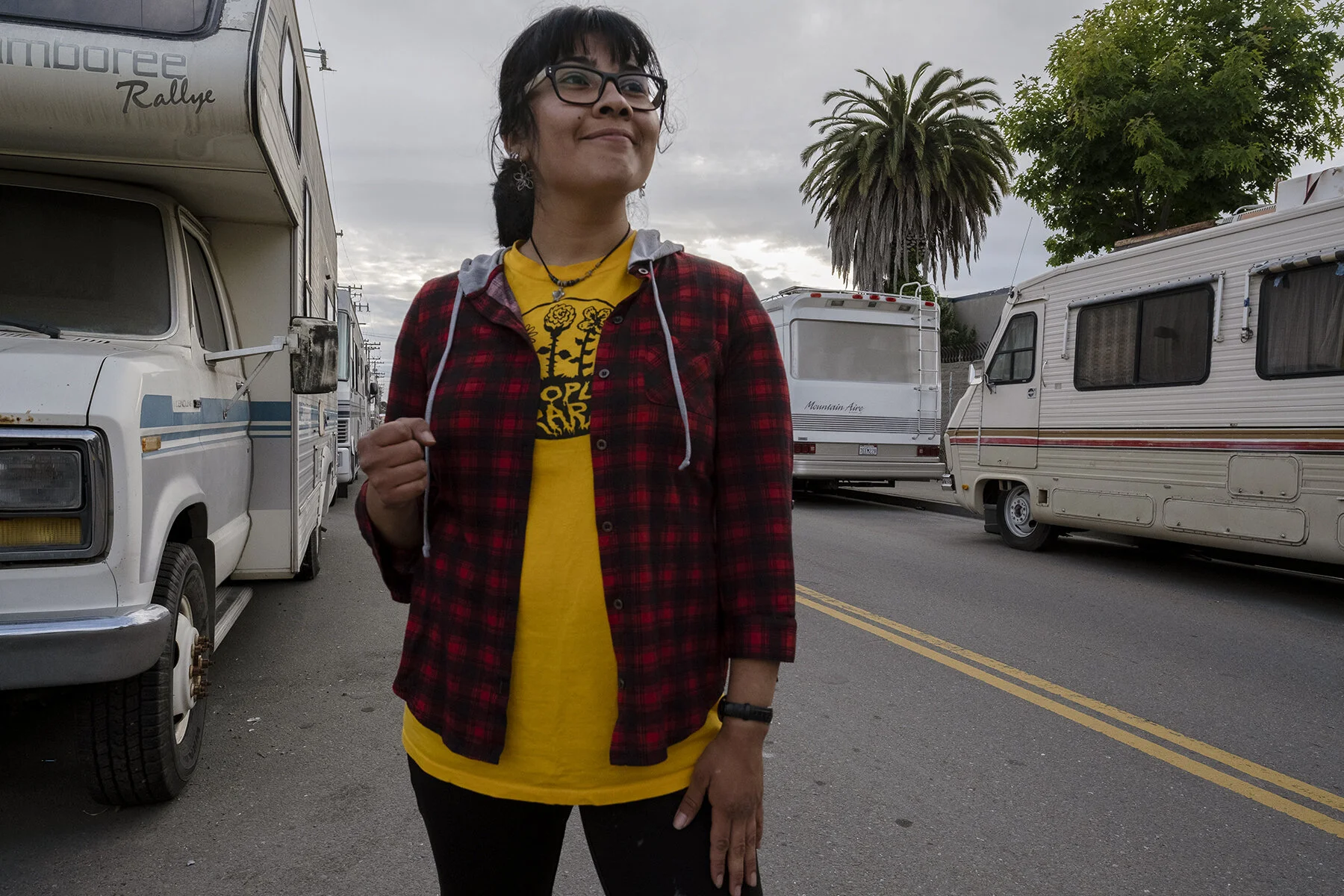
On February 14, Inaugural CatchLight Local Fellow, Yesica Prado, will open the SF Urban Film festival with Love is the Antidote, a conversation with San Francisco District Attorney Chesa Boudin. This headline event is one of several events featuring Yesica including a screening of her film “Quarantine Diary” produced in partnership with CatchLight and the San Francisco Public Press.
We caught up with Yesica ahead of the festival to hear how her work has evolved and why centering love and kindness is an integral part of her method.
In what ways has your approach to photography changed since you started your work with CatchLight?
When I started working with CatchLight, I was brought back to the world of journalism. In 2018, I began documenting unhoused communities as a means of community activism to shed light on the displacement happening on our streets. I would print photographs of my vehicle community, glue them on poster signs and show up to Berkeley city council meetings to explain how new policies are putting more obstacles before unhoused residents to survive on the streets. It was important for me to show the city council it was not simply RVs and vehicles being asked to move, but it was the displacement of people. Families. Friends. A community. I would also display my photos on my motorhome as a mobile gallery, and make calls to action to our policymakers to listen to solutions to houselessness from residents experiencing it. They have the best answers. It’s not a one size fits all solution.
Through my mentorship with CatchLight, I have learned the skills and best practices to fairly document the issues affecting my community. They guided me in capturing our story of struggle, resistance, and resilience, which reached a wider audience than those city council chambers. They also helped me to create a resource guide for vehicle communities to find essential resources and public health information during the pandemic. The method to do outreach in the communities that we report in, it has been the most important aspect of my fellowship, which deeply resonated with me. I felt empowered to be able to do something more than just stand with a picket sign. I can report, share information, and engage in conversation with my community to bring awareness and solutions. The story is not finished when it’s published and lives in cyberspace. The real work begins in engaging people to understand the issues at hand, facilitate public discourse and invite them to participate in improving their communities. Solutions journalism is an approach CatchLight helped me find, and I will always carry this practice in my future work.

Why is centering your workaround kindness and love important?
Kindness and love are fundamental values to create change. We cannot begin solving the crisis facing our communities if we do not have love for every person residing in them. Love for humanity. Love for our planet – our home. Love is the force that propels us forward despite the harsh dark circumstances. In every person that I meet, I share my heart, my attention, and my fighting spirit to encourage others to keep going. Journalism should not only report the state of affairs, but it should give people the answers and resources to do better in their lives. It should give people the power to want to change the world instead of a push to run away from it. Journalism should light the way to a brighter tomorrow.
What civil responsibilities do you hope to encourage others to undertake with your work?
I want to encourage people to make good choices in their lives and do good for others. Individually, we might not be able to solve homelessness or the massive unemployment rate, but we can still take part in making the world a better place through our everyday actions. It’s as simple as greeting a stranger on the street, helping a neighbor sweep the sidewalk or share delicious food. Every action makes a ripple, so let’s create good ripples! Eventually, those ripples can become waves to move the masses, creating an everlasting change. It all starts with us. Each day is a new opportunity to do good, and we can all start today.

What advice can you give other photographers about documenting indigent/unhoused communities with dignity and an eye for inclusion?
Displacement whether it happens outdoors or indoors, it’s a traumatic event. It’s not an easy topic to digest for both parties: those who experience it and those that read the news. It’s important to approach the story with love and care for our sources, and give people the time to express themselves. Do not report on a day when a person is feeling broken, stressed or angry. Do not ask triggering questions. Do not exploit their emotions or situation to obtain a good picture. Do not report on these hard issues with the sole intention of getting an award.
Put yourself in their shoes. Treat sources like you would treat a friend or a sibling, approaching it with love and respect. It’s important for me to give my sources an opportunity to represent themselves as they want to be portrayed, and I wait for those bad days to pass, for people to wear their best clothes and work with their time schedule. I also return with printed photos to share with them a special time that we spent together.
At times, I might be the only person that touches them as a journalist, so I always make sure it’s a good experience. Share your light. Do not be afraid to light the way. Do not be afraid to go beyond your “job description” and deliver stories in the places that need to be heard such as city council meetings. Do not be afraid to follow your heart. Do not be afraid to stand up for what is truly right.