

Images are flooding our everyday lives as a default mode of communication. We use them to express emotion, to remember moments with loved ones, and to take in and document the realities of our world. They make us smile, cringe, or even cry — in increasingly rapid turns.
At the core of this emotionally-charged relationship with images is trust: We allow these emotions to define the cadence of our days because, much of the time, we trust that what we are seeing is true.
Yet, this relatively comfortable, trust-based relationship with images is being transformed and challenged fundamentally as new technologies allow for images to be manipulated at a more rapid rate than ever before. According to the Everypixel Journal, AI generated as many images in 2023 — over 15 billion — as were created in the 150-year history of photography. With the advance of camera filters and automated enhancements, image manipulation is becoming a large part of our everyday photography practice, with less agency or effort on our part.

Google Photos, for example, in support of constructing your ideal “memories” more efficiently, now allows users to erase distracting background details and combine the best faces in a group shot at the touch of a finger right in their app.
Clear image labels and signals, similar to food labels, have been lagging.
Indeed, for most smartphone and social media users, images are more “memories” than photographs – an after-the-fact and often idealized reconstruction of reality as opposed to authentic renderings.
The challenge in terms of trust is that image manipulations are not clearly marked and visible. According to Google, details of AI intervention will appear in the metadata for anyone who thinks to access that information. For the everyday viewer, however, photographs that are purely journalistic and those created or modified with AI are streamed as equals in their feeds, often with no distinguishing information.
Clear image labels and signals, similar to food labels, have been lagging. Additionally, as it becomes easier for consumers to actively engage in image manipulation using AI, we may inevitably see an erosion of public trust in images as sources of truth.
It is against this backdrop of profound and ever faster change that CatchLight has worked for the past seven years to ensure that images continue to serve as meaningful tools to inform and connect audiences both locally and globally. We do this by supporting the vital role of visual journalists in communities.

In 2023, this work took on entirely new importance and scale. The CatchLight Local Visual Desk, a new collaborative model for visual journalism, has been recognized by key funders in media as a crucial part of the infrastructure necessary to rebuild the journalism ecosystem. Recently, we confirmed a $2 million investment from the Knight Foundation, an additional $1 million investment from Arnold Ventures, and a strategic partnership with Draper Richards Kaplan Foundation to scale our efforts to local and regional newsrooms across the United States.
These investments are a testament to the importance of this movement to make journalism more visual. They are also testament to the amazing impact that our CatchLight Local Visual Desk has had in its first two years of existence.
When practiced ethically and in a collaborative manner, the act of photographing, at its core, is an act of building trust.
In 2022, we placed eight visual journalists in local and regional newsrooms across California, from Riverside to Fresno, and supported them with editing and engagement services. Together, they have produced over 800 assignments, advancing community representation in local news statewide and leveraging the immediacy of images to increase audience engagement with their newsrooms. Average reading time increased by 20%, page views increased on average by 30% and sometimes more. In the case of India Currents, for example, visual-based stories reached on average 50% more readers.
Importantly, all eight visual journalists have remained on staff at these publications year over year – a clear indication of the value they bring to their newsrooms, and a fact worth highlighting as U.S. publications lost 52% of their visual staff between 2009 and 2019.
Behind these metrics, there is something crucial at play in the unique function of visual journalism to build public trust, and that is the vital role of the visual journalist as a trusted messenger. When practiced ethically and in a collaborative manner, the act of photographing, at its core, is an act of building trust — asking people to be vulnerable and have faith in a stranger to accurately represent them.

CatchLight Local Fellow, Hiram Durán, understands this unique role so deeply. With his editorial team at El Tímpano, a bilingual publication that serves Latino and Mayan readers in the Bay Area, he hosted a community outreach and portrait booth at an outdoor flea market in Oakland, known to vendors and patrons as “La Pulga.” With this simple setup, he created an intimate bond with each participant, one of representation and giving back.
This connection between photographer and community member can turn into long-term trust in the local media organization. For El Tímpano, this is of critical importance, as some of the residents their work serves have privacy concerns related to immigration status or those of their loved ones.
This element of trust is also apparent in the work of Sree Sripathy, CatchLight Local Fellow at India Currents, who created an open call on Instagram offering portrait sessions for Indian and South Asian residents of the Bay Area. This work culminated in a public exhibition that served as a rallying point for meaningful cultural representation for the community.

“Most of the people in the Bay Area, when they think of Indians, they think of software engineers in Silicon Valley,” says Vandana Kumar, publisher of India Currents. “For over three decades, India Currents has been showcasing stories about people and organizations that do not fit that mold. This exhibition makes a statement that we belong: We are dancers. We are photographers. We are nurses. We are teachers. Each one of us plays an important role in the communities we live in.”
The role of images as vital sources of trust in information must be preserved by being grounded in truth. Equally, the vital role of visual journalists to build trust in the communities they serve also needs to be preserved and expanded. This is exactly what CatchLight is setting out to do with these new investments and with your support.
Our goal is to serve close to 90 newsrooms nationwide with visual strategies, tools, and expertise by the end of 2027. Ultimately, our aim is to make it possible for every local and regional newsroom in the country to use the power of images and the central role of visual journalists to inform and connect communities in meaningful ways.
Help us revitalize visual journalism.
Donations to CatchLight are 100% tax-deductible. Your generous gifts allow us to make critical investments to grow this important work.

Banner Image:
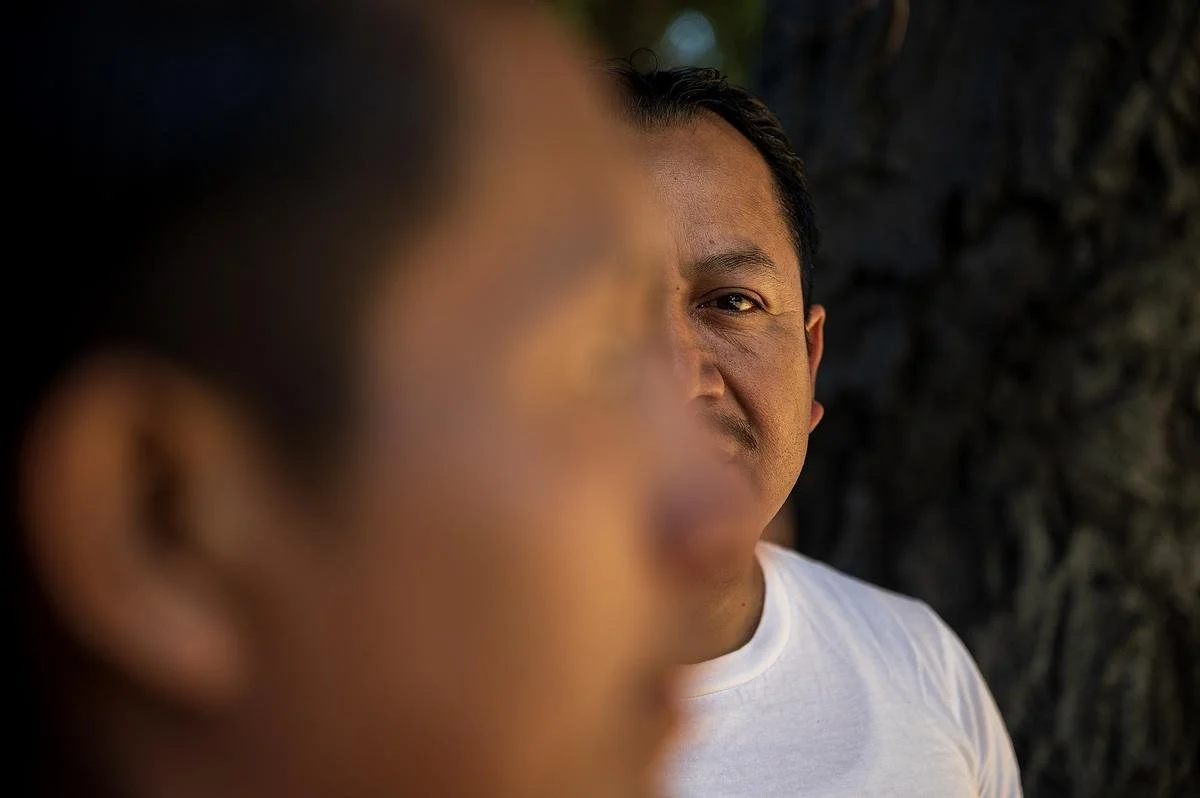
Miguel Velasquez and his son, Edgar, at Josie de la Cruz Park in Oakland, California, on August 5, 2023. Miguel has two more children in Guatemala who he wants to bring to the U.S., but he faces legal barriers to their reunification. “It’s much harder [to pursue a legal pathway],” Miguel says. “There’s so much you have to do if you want a visa. So many steps, and well, you just don’t have all the things they require.” Read more »