
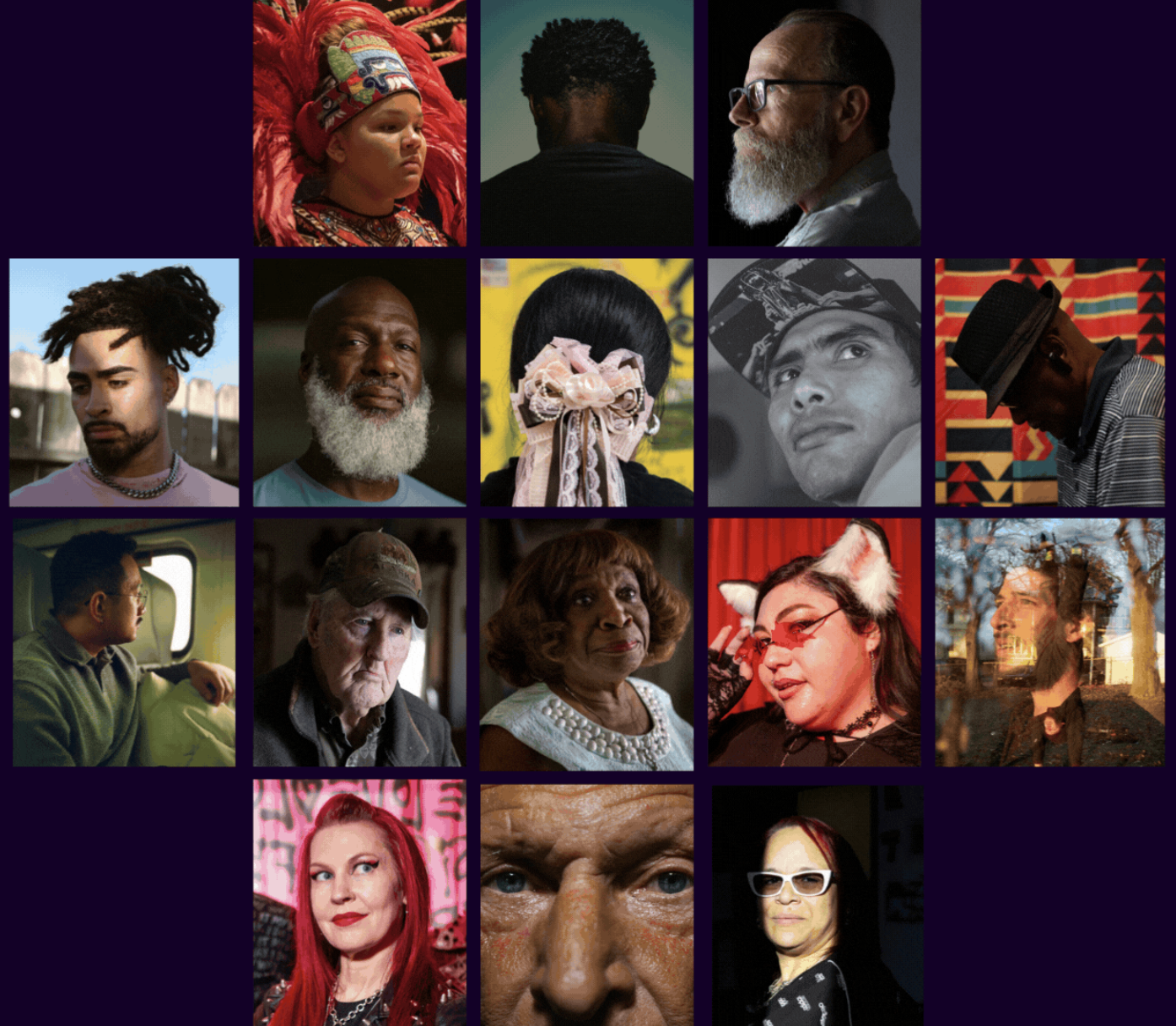

Across the United States, CatchLight’s network of 21 partner newsrooms — the most we’ve ever supported — is creating an extraordinary visual record. In sixteen of those newsrooms, we have helped place full-time staff visual journalists working on the ground, engaging neighbors, community leaders, and public officials alike.
At this critical time in our nation’s history, these visual journalists are documenting the most urgent and defining moments for their communities, from National Guard deployments in Chicago and Memphis to climate disasters in coastal Georgia, from economic strain in the California Central Valley to food insecurity in North Texas. They are taking on more personal risk than ever before to make sure these stories are seen. They are holding the powerful to account.
In Stockton, Calif., Annie Barker of Stocktonia documented unusual ICE activity and the protests that followed in late October. In San Francisco, Pablo Unzueta and the team at El Tecolote have spent more than a year chronicling how parking policy changes affect the city’s RV residents.

At a time when the need for authentic, trustworthy visual coverage has never been greater, these images reveal something profound: a portrait of America rooted in community.
Over and over again, we see how communities come together.
They come together in grief and protest over horrific violence such as the mass shooting at Annunciation Catholic School in Minneapolis.

They come together in celebrations of culture and hometown sports victories, as well as in moments of remembrance, as we saw in New Orleans for the 20th anniversary of Hurricane Katrina.


They come together in solidarity, standing shoulder to shoulder to demand justice, dignity, and change.
These moments of togetherness, documented with care and empathy, are the antidote to an accelerating trend: the proliferation of AI-generated images that, in many cases, have been weaponized to distort reality, mislead viewers, and divide communities. Authentic visual journalism remains a bulwark against this threat — a tool for truth and connection.
Our work, and that of our partner newsrooms, is built on patience and care. It takes time to earn trust. Sometimes, the very act of image-making becomes an act of community-building.
Members of the CatchLight Local Visual Desk

- Austin Current (Texas)
- Berkeleyside (Calif.)
- Black Voice News (Calif.)
- Borderless Magazine (Ill.)
- CalMatters (Calif.)
- The Current (Ga.)
- El Tímpano (Calif.)
- Enlace Latino N.C.
- Fort Worth Report (Texas)
- Gazetteer (Calif.)
- Lookout Eugene-Springfield (Ore.)
- Milwaukee NNS (Wis.)
- MinnPost (Minn.)
- Mirror Indy (Ind.)
- MLK50 (Tenn.)
- Montana Free Press
- Sahan Journal (Minn.)
- Santa Cruz Local (Calif.)
- Signal Cleveland (Ohio)
- Stocktonia (Calif.)
- The Texas Tribune
- Verite News (La.)
- The Waco Bridge (Texas)
- Wisconsin Watch
In Cleveland, for example, Michael Indriolo of Signal Cleveland invites residents to join photo walks to document what makes their communities beautiful. The result is not only a striking portrait of Cleveland but a deeper bond among its people.
Community-building is also at the heart of CatchLight Live, our touring program that brings powerful visual storytelling to audiences nationwide. In New Orleans, filmmaker Edward Buckles Jr. moved audiences with the story behind Katrina Babies, his deeply personal film about youth lives in the aftermath of Hurricane Katrina.

It is not an easy time to lead a nonprofit journalism organization — amid widespread misinformation, mistrust, and sustainability challenges. Yet it has never been a more vital or rewarding time to ensure communities are represented with honesty and nuance.
This year marks CatchLight’s greatest growth yet, expanding from 10 to 21 newsrooms, increasing our support of staff visual journalists from six to 16, reaching new audiences in four major cities through live events, and launching our first thematic initiative: the CatchLight Mental Health Desk, focused on reporting across California.
We’ve built a solid foundation to help newsrooms and visual storytellers document this moment in history — truthfully and compassionately. Now, we need your support to sustain this work and continue building a portrait of America defined not by division, but by the ways we come together.
Support from people like you is the engine that drives our work forward. Please consider making a donation in an amount that feels meaningful to you.
With gratitude,

Elodie
Our programs are possible thanks to your support
Banner image by: Pablo Unzueta / El Tecolote / CatchLight Local / Report for America